
AUTHOR'S POV
The hostel corridor smelled of toast and the particular dust that settled over Delhi mornings, and Shristi found her father already seated when she came down, his bag placed beside the bench with the kind of precision that told her he had been ready for an hour.
He had chosen the same corner every time he visited, the one with two steel chairs and a folding table the warden allowed guests to use, and he had already poured himself tea from the flask the mess boy brought around for visitors,"Neend poori ki ya aaj bhi bura sapna aaya?" he asked, without looking up from the newspaper he had somehow acquired despite being in a hostel four hundred kilometres from his own house.
"Thodi," she said, sliding into the chair across from him and reaching immediately for the plate of toast between them.
He folded the paper down enough to look at her properly, and she felt the familiar assessment, the one that had nothing to do with suspicion and everything to do with a father checking that his daughter had eaten and slept and not caught a cold in the night air.
Satisfied, he went back to pouring her tea without asking whether she wanted it,"Ab bata mujhe, tujhe idea bhi hai main kitna pareshan tha kal raat beta?" he said, setting the cup in front of her.
"Poore Delhi mein phone kar raha tha main. Ek baar bata deti ki kahan ho, bas ek call bhi itna mushkil tha kya?"
"Papa, maine sorry bola na kal raat." She pulled a piece of toast apart with more attention than the toast required.
"I know maine aapko tension diya, aur mujhe genuinely idea nahi tha ki itna der ho jayegi. Aur aapko pata hai? Aapke jaane ke baad phir warden ne bhi kitna sunaya? ab please dobara lecture mat shuru karo."
"Lecture toh tum deserve karti ho, madam..." He stirred his own tea though there was nothing in it left to stir,"Tumhe pata hai maine almost police complaint kar hi di thi? Beta i assume meri Shristi itna toh samjhti ha ki mujhe itne tension kyu hui?"
"Samajh rahi hoon papa," she said, and meant it, because underneath the practiced sheepishness there was real guilt sitting somewhere in her chest, the kind that came from picturing her father standing in some corridor with a borrowed telephone, running through names of people who might know where she was, "Achha baba, sorry, ab nahi karungi. Pakka. Kabhi bhi nahi.."
"Tu har baar pakka bolti hai."
"Is baar wala pakka hai."
He looked at her over the rim of his cup, the look he had perfected over years of catching her in half-truths, and she gave him the smile that had worked on him since she was seven years old, the one that made him sigh instead of continue.
"Theek hai," he said finally. "Khaana khao pehle, phir baat karte hain."
They ate for a while without saying much, and it was the kind of silence that only existed between people who had known each other long enough not to need to fill it.
"Unit mein sab kaise hain?" Shrishti asked eventually. "Aur aapki health kaisi chal rahi hai?"
"Sab acha Chal raha hai. Ab rotation shuru hone wali hain, toh kaam badh gaya hai. Do officers ki leave pending hai, unko manage karna padega..."
He reached for the sugar and added a spoon he did not need, "Weather kharab ho raha hai upar, toh convoy movement mein bhi dikkat aa rahi hai. Baaki sab theek hai."
"Aur aapke pasandida officers papa? Woh sab theek hain na?..i mean sid aur.. Major Rathore. Kal kitne tense lag rahe the.." she asked, careful to keep it in the same register as the rest of the sentence, folded into the list of officers and convoys and pending leave as though his name meant nothing more to her than any other name in her father's unit.
"Wo theek hai. Singh abhi bhi hospital mein hai, leutinent Junaid aur Vinay bhi." Bajwa said it plainly, the way he said everything about his officers, and if there was anything more in his voice she could not find it...
"Waise, tumhare Nana ji ke side se ek aur rishta aaya tha." Shrishti stopped mid bite and set the toast down and wiped her fingers on the napkin with a deliberateness that made her father glance up,"Papa," she said.
"Kya hua?"
"Please mat kehna aapne haan kar di."
He laughed, actually laughed, the sound filling the small corner of the corridor in a way that made two girls at the next table turn to look. "Pagal hai kya? Maine haan kyun karni hai?
Maine unko bola ki abhi bhej dena details, dekhenge, bas itna hi bola seedhe mana karta toh unhe acha nahi lagta..."
She exhaled and picked the toast back up, satisfied, and he shook his head at her the way he always did when she showed her hand too quickly,"Nani kaisi hain?" she asked, moving them onto safer ground. "Unhone Diwali pe aane ko bola tha."
"Wahi hai, apni tabiyat ki fikar kam karti hai, doosron ki zyada. Tumhare mamaji ne unko doctor ke paas le jaane ki baat ki thi, unhone mana kar diya. Kehti hain unko kuch nahi hua."
He shook his head with the fondness of a man who had given up trying to win that particular argument years ago,"Just like who Nimrat used to do, aur tumhari maasi bhi phone kar rahi thi, tumhari shaadi ke baare mein pooch rahi thi. Maine bola abhi padh rahi hai, jab time aayega tab dekhenge..."
Shrishti made a face, the one reserved for the entire subject of relatives and their opinions on her future, and her father laughed at that too, and for a while the conversation moved easily between family and gossip and the small complaints that made up the texture of their calls.
And she let herself sit inside the ordinariness of it because it was rare and because he had a flight that afternoon and she did not know when she would see him again after that.
But somewhere under the toast and the tea and her father's steady voice, the dream kept surfacing.
It had not been a memory, not exactly, only fragments that returned to her in pieces whenever there was a lull long enough for her mind to wander. In it, she had told him.
She did not remember what words she had used, only that his face had changed in a way she had never actually seen it change, not once in
Seven years, and that she had kept trying to explain and the explaining had not worked, and that the ground beneath the conversation had simply given way.
She had woken with her heart going too fast and spending last twenty four hours telling herself it was not real, that it could not be real, because she knew her father..
because she had known him her whole life and he had never once in that life given her a reason to believe he would react that way.
And yet the doubt had planted itself anyway, small and stubborn, the way doubts did when they had nothing to do with evidence and everything to do with fear.
She thought of the times she had asked him before.
She had been perhaps twelve the first time, sitting beside him on the veranda of their old quarter while he cleaned his boots, and she had asked with the carelessness only a child could manage, "Papa, let us assume agar mujhe kabhi koi ladka pasand aa gaya toh?"
He had not even looked up from the boots. "Toh mujhe bata dena."
"Bas?"
"Bas."
"Daantoge nahi?"
"Depends."
"On what?"
"Us ladke pe." She had laughed and gone back to whatever she had been doing, and the promise had settled into her the way promises settled into children, as fact rather than as something that might one day need testing.
She had asked again years later, during one of the endless rishta discussions that surrounded every gathering on her mother's side, pulling her father away from the noise into the relative privacy of the kitchen doorway.
"Papa, agar mujhe koi aur pasand ho toh?"
"Toh tum mujhe bataogi."
"Aap mana karenge?"
"Main pehle sununga. Dekho agar tumhari maa aaj yahan hoti toh yeh sab baatein tu usse share karti ab woh nahi hai but main hoon and tumhe kabhi uncomfortable hone ki zarurat nahi, jo bhi batana ho papa ko bata sakti hai."
She remembered the particular calm in his voice when he said it, the way it had made the entire rishta conversation happening in the next room feel distant and irrelevant.
And she had asked once more, more recently, the last time he had been leaving for Kashmir and she had walked him to the gate the way she always did,"Papa, sach mein agar main kisi ko love karti hoon toh?"
He had paused at the gate, looked at her properly, and said, "Main tumhari baat sununga phir us ladke ki..," and then he had left, and she had carried that sentence around with her ever since like something solid enough to build a plan on.
She had built a plan on it. That was the truth of it, the thing she had never said aloud to anyone.
She had decided, quietly and without ever announcing it to herself in so many words, that she would wait.
She would wait for Karan to say what he clearly felt and could not seem to say, because she trusted him and because she wanted him to be the one to take responsibility for his own feelings rather than have her drag them out of him.
And once he had spoken, she would go to her father herself, and her father would listen, because he always listened, because he had told her so three times across fifteen years and had never once given her reason to doubt it.
The dream had done nothing to that plan except put a crack through the confidence underneath it. She still believed her father would listen. She simply, for the first time, could imagine a version of events where something went wrong before she got the chance to tell him herself..
Where he heard it from someone else first, some officer's wife or some cousin at a wedding, and had to receive it as gossip instead of as his daughter's trust. She did not want that, did not want her father learning about Karan the way people learned things they were not meant to know yet.
She looked at him now, still eating, still entirely unaware of the small storm she had been sitting through, and she decided, without quite deciding, that she wanted to test the ground once more, just to hear the promise again, now that she was not twelve, now that it was not hypothetical in the same way it used to be.
She set her plate aside and wiped her fingers slowly on the napkin, and something in the deliberateness of the motion made her father look up from his tea.
"Kya hua?" he asked.
She did not answer directly but instead she reached across the small table and took his hand, the way she used to when she wanted something as a child, and she watched the immediate change in his expression.
The shift from ordinary breakfast conversation into the particular alertness he reserved for her.
"Papa," she said.
"Haan beta?" He set his cup down.
"Ek sawal hai."
"Bol."
"Agar main aapse kuch maangu," she said, "toh aap poora karoge?"
"Ye dangerous question hai," he said, though there was amusement threaded through the wariness.
She pouted,"Lekin aap toh hamesha kehte ho ki meri saari wishes poori karoge."
He studied her for a long moment, the way he studied a report he suspected had something buried in the middle of it, "Achha. Theek hai. Pooch."
She took a breath, "Agar main aapko bataun ki main kisi se pyaar karti hoon toh?"
He did not answer right away, and she let him take the time, watching him understand, in the particular way he understood things, that this was not the same version of the question he had answered a dozen times before over the years,"Tum ye sawal har baar poochti ho jab main aati hoon," he said eventually, not unkindly.
"Phir bhi," she said.
"Phir bhi kya?"
She insisted,"Sach mein bataiye, aap kya karenge?"
He looked at her properly then, the newspaper forgotten, the tea going cold between them, "Main pehle Tumhari baat samajhne ki koshish karunga," he said,"Poochunga wo kaun hai, milunga usse aur phir sochunga. Tumse baat karunga aur phir tumhare saath decide karunga..."
She nodded slowly, and something in her chest that had been holding itself tight since the dream began to loosen, just slightly, just enough,"Achha," she said.
"Achha kya?"
She held his hand a little tighter, "Aur agar is baar main aapko uska naam bhi bata doon toh?"
Bajwa went still. He set down the cup entirely, the tea forgotten now, and folded his arms across his chest, and the newspaper slid unnoticed off his knee and onto the bench beside him.
He looked at her the way he looked at a situation he suspected was larger than it first appeared, the same look he wore when a routine report turned out to contain something that needed his full attention, "Hmm," he said.
Held that expression for a moment longer, arms still crossed, before he reached for his cup again, and Shrishti understood that he had no intention of making this easy for her.
"Naam batao," he had said. "Phir sochunga."
She did not say a name. She sat with her hand still resting under his on the table, turning the sentence over, and something in her chest that had wanted this exact conversation for years suddenly wanted a little more time before it arrived at its destination.
She pulled her hand back, slowly, and reached for her tea instead, using the cup as an excuse to look away from him for a second,"Papa but usse pehle... ek cheez aur," she said.
"Hmm?" He was watching her over the rim of his own cup now, patient in the particular way that meant he had already guessed there would be more.
"If... hypothetically," she began, and saw the corner of his mouth twitch at the word before she had even finished the sentence.
"Hypothetically," he repeated, setting his cup down with exaggerated care, as though the word itself required handling. "Bolo, Hypothetically kya?"
"Agar wo Army mein ho toh?"
Bajwa did not answer immediately. He reached for the toast instead, tore a piece off with more attention than the gesture needed, and Shristi watched him take his time..
Recognizing the particular stillness that came over him whenever he was deciding how much of the truth to give someone.
She already knew, in outline, what his answer would be, because she had heard versions of it before, though never asked so directly by herself, and never about a man whose face she could picture as clearly as she could picture her own father's.
She remembered the evening at her Nanu's house, years earlier, when a distant cousin of her mother's had been visiting and had spent most of dinner talking about a nephew posted somewhere near Udhampur, a Major, good family, good pay, good prospects.
"Army mein hai," the cousin had said, leaning toward Bajwa with the particular eagerness of someone convinced they were doing a favor. "Achha ladka hai aapki Shrishti ke liye, dekhein toh? They're looking for a girl like her, tall, educated and.."
Bajwa had smiled, the polite smile he kept for exactly these situations, and said, "Army se rishta mat dhoondhiye uske liye, please." The cousin had looked faintly offended, as though the profession itself should have been recommendation enough, and had let the subject drop with visible reluctance.
She remembered a phone call too, standing near the landline in the hallway of their quarter while her father spoke to some relative on her mother's side who had called specifically to suggest an officer's name, and she remembered the same sentence arriving again, worn smooth from repetition.
"Nahi, Army mein dekhne ki zaroorat nahi hai." She had been perhaps sixteen then, old enough to feel a small flicker of curiosity about why her father, an Army officer himself, seemed so determined to keep the Army out of her future, and young enough not to ask.
And she remembered, more vividly than either of those, the conversation she had had with him herself, much later, after Karan had already become her husband in dreams.
She had been sitting with him on the veranda of the house, the evening cooling around them, and she had finally said what had been sitting in her for months, "Papa, aap kaise decide kar sakte ho ki mujhe Army wale se shaadi nahi karni?Aapko nahi lagta ki yeh mera decision hona chahiye?"
He had looked at her properly then, setting aside whatever he had been reading, and had taken longer to answer than she expected,"Mujhe Army wale se koi problem nahi hai, Shrishti," he had said...
She had frowned,"But Papa, aap sabko bol dete ho Army se.."
"Mujhe problem hai jab log sirf uniform dekh kar rishta lekar aate hain, bina yeh jaane ki uniform ke peeche aadmi kaisa hai.." he sighed,
"Tumhari Nana ji ke side wale jo bhi naam laate hain, unhe sirf itna pata hota hai ki ladka Major hai ya Captain hai, achhi family hai, achhi salary hai. Unhe yeh nahi pata hota ki wo aadmi apne juniors se kaise baat karta hai. Gussa aane par kaisa react karta hai. Zimmedari kaise uthata hai. Kisi aurat ke saath kaisa behave karta hai jab koi dekh nahi raha.."
Shristi had stared at him in confusion, he continued," Uniform pehen lena character ka certificate nahi hota, beta, I've seen countless brilliant officers being most terrible husbands. Including my own friends.."he sighed,
"Isiliye main nahi chahta koi aisa naam le aaye jise main khud nahi jaanta."
"Toh agar main khud kisi Army officer ko pasand karun," she had asked carefully, "jisse aap khud jaante ho?"
"Toh alag baat hai," he had said, and something in his voice had gone quieter, more certain.
"Agar main us aadmi ko saalon se jaanta hoon, agar maine dekha hai wo kaam mein kaisa hai, apne logon ke saath kaisa hai, tab main keh sakta hoon mujhe pata hai wo kaisa insaan hai. Tab uniform ki baat hi nahi rehti. Tab sirf yeh baat rehti hai ki wo aadmi achha hai ya nahi."
She had not told him then that she already had someone in mind. She had simply sat with the answer, turning it over, and had understood something that had settled into her with enormous relief.
If she ever loved a man in the Army who served under her own father, her father would not be meeting a stranger.
He would already have years of evidence sitting in front of him, gathered without either of them planning for it, evidence that came from every patrol briefing and every mess dinner and every moment Bajwa had ever watched his officers when they thought no one important was watching.
That was the conversation that had made her comfortable waiting.
She had never felt the urgency other girls seemed to feel about confessing love before it was too late, because she had believed, with the specific confidence of someone who had heard the truth from her father's own mouth.
That the day she finally told him would not be the day he started forming an opinion. It would only be the day he stopped withholding one he had already quietly formed.
The dream had not erased that memory. It had simply made her want to hear some version of it again, out loud, in the present tense, before she said the name that would make all of it real.
She looked at her father now, still working through his toast with the unhurried patience of a man who had all morning and also, somewhere behind his eyes, the beginnings of real suspicion,"Achha," Bajwa said finally, setting the toast down. "Agar wo Army mein hai. Toh kya?"
"Toh," Shrishti said, drawing the word out slightly, "kya aapko farak padega papa?"
"Maine abhi bataya na tumhe Shristi," he said, "Mujhe uniform se farak nahi padta. Aadmi se padta hai."
"Aur agar wo aapke unit mein ho?" she asked, and this time she kept her eyes on the teapot rather than his face, pouring herself a little more tea she did not particularly want, mostly for the excuse of having something to do with her hands.
Bajwa went still.
He put his cup down slowly, the small clink of it against the saucer louder than it should have been in the quiet corridor, and looked at her for a long moment before he spoke again,"Beta tumhari hypothetical situation," he said, "kaafi specific hoti ja rahi hai."
"Main bas pooch rahi hoon," Shristi said, entirely too quickly.
"Hmm," Bajwa said, in the particular tone he used when he had decided not to argue with a statement he did not believe.
She pressed on anyway, because stopping now felt worse than continuing. "Aur agar aap use jaante ho?"
"Jaanta hoon kaise?" he asked. "Kaam ke through ya... personally?"
"Personally," she said,"Aap use saalon se jaante ho."
"Depends," Bajwa said, folding his arms again.
"Kis pe depends karta hai?"
"Is baat pe ki main use achhi wajah se jaanta hoon ya buri wajah se," he said, and something in the set of his mouth suggested he already suspected the answer, though he was going to make her say it anyway.
"Achhi wajah se," Shrishti said, and something in her voice lifted despite herself, the caution slipping for just a moment,"Bohot saari achhi wajah se."
Bajwa raised an eyebrow, and waited.
"Wo bohot achha hai, Papa," she said, and once she had started she found it difficult to stop, the words arriving faster than she had planned, carrying a warmth she made no real effort to hide anymore, "Wo apne logon ka bahut khayal rakhta hai, sirf apne officers ka nahi, but juniors ka bhi, jo bahut kam log karte hain. Kabhi apna kaam kisi aur ke sar nahi daalta. He's very brave, medals bhi mile hain usko, par wo unke baare mein kabhi baat bhi nahi karta, jaise usse farak hi nahi padta. He's very calm, like very very calm, Kabhi gussa nahi karta jab tak zaroorat na ho, aur jab karta bhi hai toh bahut controlled tarike se karta hai."
"Achha ji," Bajwa said.
"He's a gentleman papa, pura ka pura. Infact he's defination of it," she continued, "Sab log uski bohot respect karte hain apne unit mein. Aur wo kabhi apni tareef khud nahi karta, jo bohot rare hai, kyunki bohot log apni har achievement ke baare mein sabko batate rehte hain jaise ki main papa.."
She smiled sheepishly and then continued, "Par wo bilkul aisa nahi hai. Wo bas apna kaam karta hai aur chup rehta hai."
"Tumhe kaafi details pata hain," Bajwa said, quietly. Shrishti froze mid sentence, the next line of praise still half formed in her mouth, and felt the heat climb into her face all at once.
"Bas... pata hain," she said, weakly.
"Hmm," Bajwa said again, and this time there was no hiding the amusement in it.
She tried to recover some ground,
"Main sirf bata rahi hoon jo maine dekha hai," she said, with as much dignity as she could manage. "Yeh koi crime thodi na hai."
"Maine kaha kahan crime hai," Bajwa said, "Main sirf yeh notice kar raha hoon ki tumhari hypothetical situation ke paas kaafi detailed service record hai."
"PAPA!"
"Kya," he said, entirely unbothered, reaching for his tea again. "Main toh bas observation kar raha hoon."
"Aap abhi bilkul waise ho rahe ho jaise..." she started, and then stopped herself, though not quickly enough.
"Jaise kya?"
"Kuch nahi," she said, and looked down at her plate.
"Nahi, bolo," Bajwa said, leaning forward slightly, clearly enjoying himself now. "Jaise kaun?"
"Jaise Baldev," she said, giving up, the name coming out half laugh and half accusation. "DDLJ waale simran ke papa, Jo beti apni marzi se koi decision le toh poora ghar hila dete hain."
Bajwa stared at her for a moment, genuinely startled, and then something crossed his face that was almost, though not entirely, offense. "Main Amrish Puri jaisa lag raha hoon tumhe?"
"Thode se," Shrishti said, unable to keep from smiling now. "Abhi ke liye."
"Ab main film ka character ho gaya?"
"Nahi, nahi," she said quickly, reaching for his hand again, half in apology. "Aap waise bilkul nahi ho. Main bas... example de rahi thi."
"Bahut insulting example hai," Bajwa said, though the corner of his mouth had given up pretending to be stern.
"Main wapas leti hoon," she said, laughing now, and he shook his head at her the way he had shaken his head at her a thousand times before, the gesture entirely without real complaint in it.
He let the silence settle for a moment, drinking his tea, and Shrishti thought, briefly, that perhaps the conversation had wandered off course enough to let her retreat from it entirely.
Then he set the cup down and looked at her with the particular directness he used when he had decided a conversation had gone on long enough without arriving anywhere.
"Achha," he said. "Toh tum use jaanti ho. Bahut achhi tarah jaanti ho, aisa lagta hai."
"Shayad," Shristi said.
"Tumhe wo bohot pasand hai," Bajwa said. It was not a question.
She did not answer immediately, and he watched her not answer, which told him everything the silence was supposed to hide.
"And you're very serious about this hypothetical crush of yours," he said, more quietly now.
"Yeh," Shrishti said, "Bohot serious hai."
"Sach mein?" Bajwa said.
"Haan," she said, and could not stop the smile spreading across her face even as she tried to look offended by the suggestion.
"You're actually serious about it? Beta?" She nodded, once, and felt something in her chest go warm and unguarded in a way she had not planned for it to, not this early in the conversation, not before she had actually said the name out loud.
Bajwa studied her for a long moment,
and something in his expression softened out of the teasing and into something closer to tenderness, though he kept his voice dry when he finally spoke.
"Jis confidence se tum meri taraf se feelings announce kar rahi ho," he said, "mujhe us aadmi se zyada tumhari taraf dekhna chahiye."
"Papa," she said, embarrassed now in an entirely different way, and reached to fix her dupatta though it had not moved at all.
He let her have the moment, checking his watch briefly out of old habit, and then set it aside and looked at her again, and this time there was nothing left in his face except plain curiosity, the teasing having burned itself down to something more direct," In sab baaton ko sunkar i think i can guess," he said. "Ki yeh aadmi kaun hai.."
Shristi stared at him in disbelief with a big grin,"Sachme papa?" He nodded. She held his hands,"Toh batao? Who is he?"
Bajwa let the question sit for exactly as long as he needed to compose his face into something solemn.
"Siddharth," he said.
For a full second, Shrishti did not move. Then her face contorted into an expression of pure horror, and she pulled her hand back from his as though it had suddenly turned hot.
"Ew," she said. "Ew, ew, ew, ew."
"Kya hua?" Bajwa asked, entirely too innocently, reaching for his tea with the calm of a man who had not just said something appalling.
"Papa, please." She wiped her palm on her dupatta as if the very suggestion needed to be physically removed from her hand. "Siddharth? Seriously?"
"Kyun?" he said, and now there was the faintest tremor at the edge of his mouth, the effort of holding a straight face becoming visible, "Achha ladka hai. Medals hain uske paas. Apne juniors ko bhai ki tarah rakhta hai. Bahut responsible hai. Main use saalon se jaanta hoon, mere hi unit mein kaam karta hai."
"Papa, stop," Shrishti said, though he showed no sign of stopping.
"Zimmedaar hai," he continued, ticking the qualities off with the flat seriousness of a man reading out a citation,"Discipline mein bhi kabhi kabhi issue hota hai lekin achha hai. Apne seniors ka bhi respect karta hai, juniors ka bhi. Bahut hi.."
"STOP. Stop, stop, stop, Papa!" She actually put her hand up now, as though she could physically block the sentence from continuing. "Ew! He is my friend!"
"Exactly," Bajwa said, entirely unbothered, "Wo tumhara bhi friend hai."
"That's not.." she started, and he talked straight over her, warming to the theme.
"Tumhe achhi tarah jaanta hai," he said. "Tumse achhe se behave karta hai. Tum dono ka bahut achha understanding hai, aisa lagta hai."
"He's like my brother, Papa. Aap yeh kya bol rahe ho..," Shristi said, in the particular tone of someone who has reached the very end of her patience and is one sentence away from losing it entirely. "Actually, no. Worse than my brother. Papa, please, this is disgusting, stop, I can't even.."
"Toh phir kaun?" Bajwa asked, mildly, watching her over the rim of his cup with an expression that gave away absolutely nothing.
"It's not him," she said, too loudly, the words arriving before she had fully decided to release them. "It's KARAN RATHORE. MAJOR KARAN RATHORE!"
The word landed in the corridor with more volume than she had intended, and somewhere to her left a hostel attendant carrying a stack of folded towels glanced over, and two girls at the far table turned their heads for a second before returning, with visible disappointment, to their own breakfast.
Shristi froze, both hands pressed flat against the table, and felt her face go warm all the way to her ears.
Bajwa said nothing for a moment. He set his cup down, unhurried, and the corner of his mouth, which had been fighting a losing battle for the last several minutes, finally gave up and curved into something that was unmistakably a smile,"Aapko pata tha," she said, narrowing her eyes at him.
"Mujhe kaafi der pehle pata tha,"
Bajwa said, smiling genuinely now.
She glared,"Toh phir Sid kyun bola?"
"Tumhara reaction dekhna tha," he said, and had the audacity to look genuinely pleased with himself about it.
"You're so bad," Shrishti said, and threw her napkin at him, which he caught without any real effort and set beside his plate.
"Kal raat ke baare mein baat karte hain toh main bura hoon," he said, "aur ab bhi bura hoon. Tum kabhi khush nahi hoti mujhse. Kal raat tumne mujhe daraya toh main ab mazaak bhi na karun.."
"Aap ne mujhe pura corridor ke saamne embarrass kar diya," she said, lowering her voice now, aware of exactly how much of it people had heard. "Papa, aapko pata hai na hum hostel mein hain?"
"Naam toh tumne poore corridor ko suna diya..," Bajwa said.
She covered her face with both hands for a moment, groaning into her palms, and when she lowered them again there was no real anger left in her expression, only the particular mortification that comes from realizing you have announced the most private thing you own to a hostel full of strangers over breakfast.
"Achha," Bajwa said, and now his voice had settled into something gentler, the teasing not entirely gone but no longer at the front of it.
"Toh it's Karan?"
She nodded, and something in the nod carried more than agreement, a kind of release that made her sit back slightly in her chair, as though a weight she had been holding against her chest for years had finally been set down on the table between them.
"Kyun?" Bajwa asked, simply.
And once she started, she found she could not entirely stop.
"Bataya toh because wo bohot handsome hai..." He stared. She added quickly.."responsible hai," she said, and then, before he could say anything.
"Aur main jaanti hoon aapne yeh sab pehle bhi suna hai, par is baar main sach mein use bata rahi hoon, Karan ko. Wo bohot pyaara hai, aur usne bahut kuch kiya hai jo koi jaanta bhi nahi, kyunki wo kabhi apne baare mein baat nahi karta. Wo sab ke saath itna achha hai, Papa, aap khud dekhoge, agar aap dhyaan se dekho toh, wo har kisi ka khayal rakhta hai, chhoti chhoti cheezein bhi notice karta hai jo koi aur nahi karta. Agar koi junior officer ka kuch dukh hai toh wo poochta hai, sirf kaam ke baare mein nahi, waise bhi poochta hai. Usne kabhi apni rank ka use kisi pe unnecessarily nahi kiya, kabhi bhi nahi, chahe kitna bhi easy hota use aisa karna."
She paused only long enough to take a breath, and Bajwa watched her, his expression settling into something quiet and attentive, the tea in front of him entirely forgotten now.
"Wo bohot dependable hai," she continued. "Aap use kuch bhi keh do, wo bhoolta nahi hai. Usne mujhe ek baar bataya tha ki main apni files mein kaunsi pen use karti hoon aur mujhe pata bhi nahi tha ki usne notice kiya hai, aur next time jab main mili use, aur he was helping mein usne mere purse se exactly wahi pen nikali, like it had dozens of pen. Chhoti si baat hai, par yeh cheezein hoti hai na, jo pata chalti hai ki insaan kaisa hai. Aur wo funny bhi hai, though wo khud kabhi manega nahi, aur haan wo irritating bhi hota hai kabhi kabhi, mujhse argue bhi karta hai, hamesha apni baat pe atka rehta hai jab tak wo galat na ho..."
She stopped herself, aware that she had drifted somewhere she had not planned to go, and pressed her lips together for a second. "Par wo bas... Karan hai, woh aisa hi hai."
"Achha," Bajwa said, quietly.
"Papa, aapko yaad hai," she said, sitting forward again, "Jab main 12th le baar cantonment aayi thi, aapse milne? Tab main pehli baar use dekha..." she hesitated, then decided there was no point hiding the rest of it now. "Aur maine uski picture bhi kheench li thi."
Bajwa looked at her properly. "Tumne?"
"Accidentally papa, main toh mountains ki pictures le rahi thi, appreciating the nature's Beauty know?," she said.
He raised an eyebrow, the exact eyebrow that had made her confess things since she was six years old, and she held out for approximately two seconds before folding entirely.
"Okay, fine, accidentally nahi," she admitted. "Par main use jaanti bhi nahi thi tab, Papa, main bas... usse kuch tha uske baare mein jo main samajh nahi paayi thi us waqt but he was so handsome, polite and genuine. Baad mein, jab main use actually jaanne lagi, tab pata chala ki wo cheez kya thi."
"Kitne saal ho gaye tumhare is crush ko?"
"Almost seven Papa," she said, simply, and let the word carry whatever weight it needed to carry without trying to make it sound more dramatic than it was.
"Papa, ek cheez hai jo main aapko batana chahti hoon. Pehle hi," she said, and her voice changed slightly here, steadier, more deliberate than the excited rush of a moment ago,"Usne kabhi, kabhi bhi, koi line cross nahi ki hai. Mere saath. Chahe maine usse kitna bhi torchure kiya ho, chahe hum kitne bhi close ho gaye ho, usne mujhe hamesha space di hai, hamesha, chahe uske liye khud kitni bhi mushkil aajaye....." She looked down at her hands for a second.
"Mujhe wo cheez bahot attractive lagti hai. Main use trust karti hoon, Papa. Puri tarah se. He's very.. cute jab woh.. he gets flustered..."
Bajwa did not say anything immediately, and the silence between them was not the silence of a man searching for a response but the silence of a man who had heard something he needed to sit with for a moment.
"Tumhe pata hai," he said finally, "tum pichle das minute se sirf Karan ke baare mein baat kar rahi ho. Non stop? Bina ache se saans liye..."
Shrishti blinked, and only then seemed to register how much she had said, the entire breakfast forgotten in front of her, her tea gone cold, her hands still moving slightly in the air from whatever gesture had accompanied her last sentence.
"Oh," she said, and felt her face go warm again, though this time for an entirely different reason. "Sorry."
"Sorry mat bolo," Bajwa said. "Bas... Army mein. Woh bhi ek para sf officer, 6ft grown up man, cute bhi hota hai ?"
"Papa! Please.."
"Main sirf pooch raha hoon," he said, entirely too pleased with himself. "Medals, responsibility, juniors, manners, chai yaad rakhna... beta, shaadi ka proposal de rahi ho ya citation submit kar rahi ho?"
"You're impossible," she said, though she was laughing now, the sound arriving easily after the tightness that had sat in her chest all morning.
"Naam lete hi tumhari shakal badal gayi," Bajwa said, watching her with something that had gone soft underneath the dry humor. "Pata hai tumhe?"
"Kaisi badal gayi?" she asked, suspicious now.
"Bas badal gayi," he said, and did not elaborate.
He looked at her for a long moment then, longer than the conversation strictly required, and something in his expression shifted away from the teasing entirely, settling into a quiet he did not immediately explain.
He was looking at her the way he might look at an old photograph, seeing at once the daughter sitting across from him now and some earlier version of her layered beneath it, and Shrishti, watching the change come over his face, felt suddenly uncertain in a way that had nothing to do with Karan,"What?" she asked.
"Bas," Bajwa said, "abhi realize hua ki tum badi ho gayi ho." She did not have an answer for that, not immediately, and for a moment neither of them said anything at all, the corridor continuing on around them.
Them she let the quiet stretch only as long as she could stand it, which was not very long at all, before she leaned forward again, both elbows nearly on the table now, watching her father's face for anything he might be trying to hide from her.
"Toh ab aage?" she said.
Bajwa reached for his cup instead of answering, took a slow sip, and set it down with the deliberate calm of a man who knew exactly what he was doing to her,"Aage kya?"
"Kya papa?" she pressed. "Achhe se batao na."
"Batao kya?" he said, folding his napkin into a neat square though it had already been folded once. "Tumne toh sab kuch bata diya. Ab main kya bataun?"
"Aap kya soch rahe ho," she said. "Karan ke baare mein. Mere baare mein. Is sab ke baare mein."
"Main soch raha hoon," Bajwa said, with maddening slowness, "ki meri beti pichle das minute se ek hi topic pe non stop bol rahi hai aur ab bhi patience nahi hai use. Jis ladki ka man kal ke kharede hue top se aaj hi utar jaaye woh keh rahi hai use saat saal se ek ladka pasand hai.."
"Papa, main hamesha se impatient hoon," she said,"Aapko yeh pata hai."
"Mujhe pata hai," he said. "Toh phir answer bhi jaldi doon?"
"Haan!"
He looked at her for a long moment, something amused settling into the lines around his eyes, and then he said, entirely too lightly for the weight of what he was actually asking, "Tu aise baat kar rahi hai jaise kal shaadi karni hai."
Shrishti went still for exactly one second, and then, instead of the embarrassed denial he had clearly been expecting, she nodded, seriously, as though he had simply stated a fact she was glad he had finally arrived at.
"Wahi hi toh baat hai," she said.
Bajwa's cup paused halfway to his mouth,"Bas thode din aur," she continued, entirely unbothered by the way he was now staring at her, "B.Ed complete ho jaaye. Phir mujhe Karan se shaadi karni hai."
"Achha," Bajwa said, setting the cup down without drinking from it,
"Tumne poora plan bana rakha hai mujhe Bina bataye..."
"Kyun nahi banaungi," she said, though a small flush had crept up her neck now that she had heard herself say it out loud to him rather than only to herself in the dark of her hostel room, "Main koi bachhi thodi hoon, Papa. Mujhe pata hai main kya chahti hoon."
He studied her for a moment, and something in his expression, underneath the disbelief, had gone quietly proud, though he did not say so directly,"Tum abhi bhi meri bachhi ho," he said instead. "Chahe kitni bhi B.Ed kar lo."
"Papa, please, abhi emotional mat ho jaana," she said, wagging a finger at him with mock severity, and he actually laughed at that, the sound loud enough that the mess boy passing with a tray glanced over before continuing on his way.
"Achha, theek hai lekin saat saal? Se kyu nahi bataya? Problem kya hai..," he said, and made a visible effort to relax his face, which only made Shrishti laugh harder, because the effort itself looked comically deliberate.
"Papa," she said, once she had stopped laughing, "problem yeh hai ki wo khud kuch bolta hi nahi hai."
"Kaun, Karan?"
"Haan." She picked up her spoon and set it down again without using it, the restlessness of the last several minutes finally finding somewhere to go.
"Papa, maine itne hints diye hain use. Itne. Maine flirt kiya, maine har baar khud ko available rakha jab bhi wo aata hai, maine use coffee pe bulaya, maine use regimental ball mein deliberately apne paas rakha, maine har mumkin tarika try kiya hai jisse wo samajh jaaye, aur wo..."
She threw her hands up slightly, the gesture arriving before she could stop it, "Wo bas khada rehta hai apni discipline ke peeche chhup ke, jaise agar wo kuch nahi bolega toh kuch hua hi nahi."
"Achha," Bajwa said, watching her with open interest now.
"Woh bolta hi nahi hai, Papa," she said again, this time with real complaint in it,"Par wo mera itna khayal rakhta hai, aapko pata bhi nahi hoga. Jab bhi leave milti hai use, wo mujhse milne aata hai, chahe apni family ke saath time kam mile use. Wo phone karta hai, poochta hai main theek hoon ya nahi, mujhe khana khaya ki nahi, exam kab hai, sab yaad rakhta hai. Aur phir bhi.."
She exhaled, the frustration and the fondness tangled up together in her voice in a way that made it impossible to tell where one ended and the other began, "...phir bhi wo kabhi seedhe seedhe nahi bolta. Kabhi nahi."
Bajwa was quiet for a moment, turning his cup slowly on its saucer, and something in his silence made Shrishti look at him more carefully, uncertain whether he was amused or simply thinking.
"Papa, itna fattu hai na aapka officer," she said, and then, because she had already said far more than she had ever intended to that morning and saw very little point stopping now, "Woh toh kal raat sapne mein bhi nahi bol paaya."
Bajwa's eyebrows rose slowly. "Sapne mein?
"
"Haan," she said, and then, catching the particular expression that had come over her father's face, added quickly, "kuch aisa hi tha ki sab kuch easy tha, koi wajah nahi thi ki wo na bole, aur phir bhi wo nahi bola. Aisa hi hai wo, Papa, real life mein bhi, sapne mein bhi."
"Shristi," Bajwa said, in the tone of a man recalibrating how much of his daughter's inner life he actually wanted access to, "mujhe lagta hai kuch details hain jo mujhe sunne ki zaroorat nahi hai."
"Nahi, nahi, wo waisa sapna nahi tha papa," she said, waving off whatever he was imagining with visible embarrassment of her own now, "Bas main keh rahi hoon wo itna dara hua hai bolne se."
"Darta kyun hai karan? Rathore is very mature aur woh.."
She hesitated for the first time since she had started talking, and something more careful entered her voice. "Kyunki usse darrr lagta hai," she said, "ki agar usne kuch bola toh aap usse court martial kar doge."
Bajwa's lips twitched, the beginning of a laugh he seemed to be actively suppressing. "Usne aisa bola tumse?"
"Nahi," Shrishti admitted,"Usne toh kabhi kuch nahi bola, wahi toh problem hai. Par main jaanti hoon use, Papa. Wo aapki bohot respect karta hai, aapne use itne saalon se train kiya hai, aapne use trust kiya hai, aur usse darr hai ki agar wo aapki beti se pyaar karega toh wo trust toot jayegi aur wo kabhi nahi chahega ki aap use... kisi aisi nazar se dekho jisse aapka respect kam ho jaaye uske liye."
Bajwa did not say anything for a while, and the silence this time was different, quieter, without the mischief that had been running underneath most of their conversation.
"Papa," Shrishti said, and now her voice had dropped, the impatience giving way to something more careful, more exposed than anything she had let herself sound like all morning,"Aap humein shaadi karne doge na? Aapki blessings ke saath?"
She watched him with a directness she had not managed even when she was building her way toward Karan's name, her hand finding his on the table without her quite deciding to reach for it.
Bajwa looked down at her fingers wrapped around his, and then up at her face, and something in his own expression settled into a stillness she recognized from the rare moments when he was entirely serious.
"Beta," he said.
She waited, and he let the word sit there for a second before he continued, his thumb moving once, absently, over the back of her hand.
"Main mana nahi kar raha," he said. "Tumne shayad yeh soch ke rakha tha ki main mana karunga, ya shayad soch nahi, bas darr tha thoda, par mana nahi kar raha main."
Shrishti's breath caught, though she did not say anything, afraid that speaking would interrupt whatever he was about to say next.
"Meri ek shart hai," Bajwa said. "Sirf ek."
"Kya?" she asked, immediately, unable to help herself.
"Wo khud aayega mere paas," he said. "Pehle tumse bolega. Apne muh se. Phir mere paas aayega, aur mujhse tumhara haath maangega, main iske alawa kuch nahi chahta."
"Bas?" she said, half in disbelief.
"Bas," he said. "Main use jaanta hoon, Shristi. Bohot saalon se jaanta hoon. Maine dekha hai wo kaisa officer hai, kaisa insaan hai, mujhe uske character ke baare mein koi shaq nahi hai."
He looked at her steadily now,"Par tum uss aadmi ki hakdaar ho jo tumhare saamne khada ho ke apni feelings ke liye zimmedari le sake. Jo darr ke peeche na chhupe. Main nahi chahta tumhe wo mil jaaye jisse main khud jaake keh doon ki haan kar do. Tumhe wo milna chahiye jo khud aake maange."
Shrishti stared at him, and then, despite the sudden thickness in her throat, something in her broke into a laugh, half disbelieving and half overwhelmed, because the entire weight Karan had been carrying around for years..
The fear that had kept him standing two feet away from her at every regimental function, every coffee, every moment he could have simply said the one sentence that would have changed everything, had apparently been built on nothing at all,"Wo itna darta hai," she said, shaking her head, "aur aap toh already ready ho."
"Main tumhara baap hoon," Bajwa said. "Main tumhari khushi ke alawa kya chahunga."
She did not answer that. She got up instead, the chair scraping slightly against the floor, and came around the small table to wrap both arms around him, her cheek pressed briefly against the top of his head the way it had not been since she was a child small enough to still fit that way against him,"World's best papa," she said into his hair.
"Achha, ab main world's best ho gaya," Bajwa said, though he did not pull away, one hand coming up to rest against her arm. "Do minute pehle main Amrish Puri tha."
"Aap dono ho sakte ho," she said, pulling back enough to grin at him,"Depends on the day."
"Baith jao," he said, tugging her back toward her chair with mock exasperation, though there was nothing in his face that matched the complaint in his voice. "Poora hostel dekh raha hai."
She sat back down, still smiling, and reached for her cold tea without any real intention of drinking it, mostly because her hands needed something to hold now that the conversation had arrived somewhere she had spent years imagining and had never quite believed would feel this simple.
"Ek baat aur," Bajwa said, once she had settled.
"Kya?"
"Usse keh dena," he said, reaching for his own cup, "ki jitni jaldi himmat jutaaye, utna achha. Main hamesha uske liye wait nahi karunga."
"Papa," Shrishti said, laughing again,
"Aap toh usse aur darwa doge."
"Achha darr hai yeh," Bajwa said. "Sahi cheez ke liye darna sahi hota hai." They kept talking. After thirty minutes Karan reached the hostel gate a few minutes before the time he had told Bajwa.
The jeep parked and switched off, his uniform pressed the way it always was, though he had slept badly and knew it showed somewhere around his eyes even if nowhere else.
He returned the sentry's salute at the entrance and walked toward the visitors' corridor with the particular briskness of a man trying to outpace whatever he was feeling before it caught up with him.
He had spent most of the night
replaying the previous evening in fragments he could not fully control. Shrishti's face when the warden had scolded her.
The way she had held onto his arm afterward, not for balance but because she needed something steady.
The words that had come out of him before he had properly decided to say them, the admission that he could not lose her, spoken with Bajwa close enough that he might easily have heard some part of it.
Karan had gone over it a dozen times since, trying to determine exactly how much Bajwa had seen and how much he had understood, and had arrived nowhere close to certainty.
He had decided, somewhere around three in the morning, that the most likely outcome of this morning was a conversation he did not want to have. Bajwa would be quiet on the drive to the airport. He would ask something oblique, testing, the way senior
officers tested subordinates who had stepped somewhere they were not supposed to step.
Karan had prepared himself for it the only way he knew how, by deciding in advance that he would take whatever came without excuses. Whatever this cost him with Bajwa, he had earned it honestly enough.
He turned the corner into the corridor and found them both already there, Bajwa seated with his tea, Shrishti beside him with her plate pushed away, and the two of them were laughing about something, her hand resting easily on his forearm, his head tilted toward her in the unguarded way fathers only allowed themselves around their own children.
For one unguarded second, seeing it, something in Karan's chest loosened. Whatever had happened, whatever Bajwa knew or suspected, it clearly had not touched the two of them. That
was something.
Then Bajwa looked up and saw him, and the laughter stopped. It did not vanish entirely. Bajwa's expression simply resettled itself into something more composed, more familiar..
The face he wore for duty rather than the one he had been wearing a second earlier for his daughter, and Shrishti's smile did something similar, tucking itself away so quickly that Karan would have missed it if he had blinked.
He did not miss it,"Sir," he said, coming to a stop and offering a salute that felt, for reasons he could not entirely name, more formal than the morning strictly required.
"Karan," Bajwa said, and there was nothing unusual in his voice at all, which somehow made it worse,"Time pe aaye ho."
"Ji, sir." Karan glanced toward
Shrishti for half a second, and found her watching him with an expression he could not read, something bright underneath the surface that she did not seem entirely willing to explain. He looked back at Bajwa, "Ready hain aap?"
"Bas nikalte hain." Bajwa folded the newspaper he had not been reading and set it beside his plate, unhurried, and Karan found himself watching every small movement for a signal he could not identify.
"Itne.tense kyun lag rahe ho tum?" Bajwa asked, glancing up at him.
"Tense nahi hoon, sir." The denial came too fast, and Karan heard it land wrong even as he said it, and beside her father, Shrishti pressed her lips together in a way that was almost, though not quite, a smile.
Bajwa studied him for a beat longer than the question required, and Karan felt the full weight of thirty years of command experience settle on him without a single additional word being spoken..
And then Bajwa simply reached for his bag, and the moment passed, though it left something uneasy sitting in Karan's stomach that did not go anywhere,"Aapka saaman?" Karan asked, mostly to have something useful to do with his hands.
"Yeh hi hai." Bajwa gestured to the single bag beside his chair, and Karan picked it up before anyone could tell him not to, grateful for the excuse to move.
Shrishti stood as well, smoothing her dupatta, and looked between the two of them with an expression that Karan was beginning to find genuinely alarming...
Because it was not the expression of someone who had just watched her father leave. It was the expression of someone enjoying a private joke she had no intention of sharing.
"Major," she said, and something in the way she said his rank made his shoulders go instinctively straighter, "aap mujhe bye nahi bolenge?"
Karan froze for exactly one second, the bag still in his hand, and his eyes went immediately to Bajwa, who was watching him with an expression of perfect, unhelpful neutrality.
"Study well, ma'am," Karan said, falling back on formality the way a man reaches for the nearest solid object when the ground shifts under him,"Aur achhe marks se pass out kariyega."
"Of course, Major," Shrishti said,
entirely too sweetly, and Karan understood, with a sinking feeling he could not immediately explain, that she knew exactly what she was doing to him and had every intention of continuing.
Bajwa reached the jeep and paused near the door, turning back once more, and Karan, standing beside him with the file, straightened automatically, falling into the posture he kept for exactly this kind of moment, respectful, attentive, entirely proper.
"Karan," Bajwa said, "gaadi mein woh documents hain jo maine tumhe diye the, unko safe rakhna, unit mein submit karwa dena Monday tak."
"Ji, sir," Karan said. "Ho jayega."
Bajwa nodded, satisfied, and turned to open the door on his side, and it was in that small window, his attention briefly elsewhere..
The file still held between Karan's hands, that Shrishti crossed the remaining distance and, before he had any chance at all to anticipate it, leaned up and pressed a quick kiss to his cheek, in one swift motion.
It was feather light.
Karan went entirely still. The file slipped an inch in his grip before he caught it, his knuckles whitening slightly around the edge, and he stared at her, his mouth opening slightly around some word that never quite arrived...
His entire face doing something between shock and open panic, his eyes flicking immediately, instinctively, toward Bajwa, still occupied with the door on the other side of the jeep.
Shrishti had already stepped back, her expression settling into something so perfectly, angelically innocent that it would have fooled anyone who had not spent the last several hours learning exactly how dangerous that particular expression was.
"Kya hua Major ? Aapka mooh laal laal kyu ho gaya?" she said, blinking at him.
Karan did not answer. He could not, apparently, entirely locate his voice.
Bajwa, closing the door on his side, glanced over the roof of the jeep, his gaze catching on Karan's expression, on the file held slightly crooked in his hands, on the faint, unmistakable color rising along the tops of his ears.
"Kya hua, Karan?" Bajwa asked, "She's right. Fever vagerah toh nahi hai ?"
"Ji, sir, nahi, sir," Karan said, in the voice of a man reciting words without any confidence in their meaning, and straightened the file with more force than necessary, tucking it firmly under his arm, "Sab theek hai."
Bajwa studied him for a moment longer, one eyebrow lifting slightly, the particular expression of a senior officer who had noticed something without yet being able to name it..
And then his gaze moved to Shrishti, who was standing with her hands folded neatly in front of her, the picture of complete and total innocence.
"Papa, aap Karan ko itna ghoor kyun kar rahe ho?" she asked, with such convincing bewilderment that Karan, still recovering somewhere behind her, made a small, strangled sound that he immediately turned into a cough.
"Kuch nahi," Bajwa said, slowly, though the eyebrow did not entirely come down, and he looked at Karan once more before apparently deciding that whatever had happened was not worth pursuing further with a flight to catch, "Chalo, Karan. Der ho rahi hai."
"Ji, sir," Karan said, and moved around to the driver's side with the careful, over precise walk of a man trying very hard to convince his own body that everything was functioning normally, and got in, and started the engine, his hands settling on the wheel with visibly more attention than the empty road ahead required.
He looked at Shrishti once, just before the jeep pulled away, and found her watching him with a smile she was not even attempting to hide, and something in his expression, caught between mortification and helpless fondness..
Made her smile widen further, and he looked away first, back toward the road, his jaw working, and did not look back again as the jeep turned out of the gate and merged into the traffic beyond it.
Shrishti stood there for a moment, watching the space where the jeep had been, and then the laugh she had been holding since the moment she stepped back from him finally broke free..
One hand coming up to cover her mouth, her shoulders shaking with it. She thought of his face, the file slipping, the way his eyes had gone straight to her father with the particular terror of a man expecting the sky to fall, and she laughed harder, shaking her head, unable to stop herself from picturing it all over again.
The laughter eased slowly, the way it always did, settling into something quieter, warmer, and she stood at the gate a little longer than she needed to, looking down the empty road where the jeep had disappeared..
Carrying both the men she loved most in the world toward an airport and, eventually, toward Kashmir, toward distance, toward the particular ache of not knowing exactly when she would see either of them again.
She lifted her hand and waved, though there was no one left to see it, and stood there another moment before finally turning back toward the hostel, smiling to herself.
Karan eased the jeep out through the hostel gate, the tyres crunching over the gravel patch before finding the smoother tar of the road, and for a full minute he said nothing at all, both hands set correctly on the wheel at ten and two..
Eyes fixed dead ahead as though the empty road demanded the kind of concentration usually reserved for convoy movement through hostile terrain. Colonel Bajwa sat beside him with his cap resting on his knee, one arm out the window..
Humming something under his breath that Karan couldn't place, an old Kishore Kumar tune maybe, and every few seconds Karan's right hand would drift off the wheel just slightly, fingers grazing the side of his jaw where her lips had touched..
Before he caught himself and put the hand back where it belonged. He told himself it was nothing. He told himself this several times in the space of that one minute, which was itself proof that it was not nothing.
"Traffic thoda zyada hai is time," Bajwa said eventually, glancing at his watch, and Karan nodded a fraction too quickly.
"Ji sir, main dusre route se le loonga, thoda ghumega lekin faster hoga."
He took the turn near the flyover with the kind of precision that came from having driven this stretch of Delhi a hundred times before, checking his mirrors out of habit rather than necessity..
And Bajwa watched him do it with the mild, appreciative silence of a man who had spent thirty years learning to recognise competence when he saw it and had long since stopped needing to comment on it every time.
It was only when they stopped at a signal near Dhaula Kuan, the jeep idling behind a state transport bus belching diesel smoke, that Bajwa turned his head and looked at him properly,"Sab theek hai na, Karan?"
"Ji sir, bilkul theek." The answer came out faster than it needed to, and Karan heard himself say it and immediately regretted the speed of it. He cleared his throat, adjusted his grip on the wheel though there was nothing to adjust, and added, more evenly this time, "Bas traffic ka calculation kar raha tha, sir. Flight se pehle pahunchna hai."
Bajwa made a small sound that could have meant anything and turned back to the window, and Karan exhaled slowly through his nose and told his ears, uselessly, to stop being red.
The airport, when they reached it, had the particular chaos of a Delhi morning departure, trolleys being wheeled across the covered drop off in erratic diagonal lines, a family of six arguing cheerfully over how many suitcases counted as hand luggage..
Karan had the jeep parked in under a minute, in a spot that was technically not a parking spot but that no one was going to argue with a military vehicle over, and he was out and around to the passenger side before Bajwa had even finished unbuckling.
"Sir, aap yahan baith jaiye, main dekh raha hoon," he said, already reaching past the Colonel for the smaller of the two bags, the leather one that Bajwa always insisted on carrying himself and that Karan always ended up carrying anyway.
He set it down by the trolley stand, went back for the larger case, checked the luggage tags against the tickets in the folder without being asked to, and only then did he straighten up and look at Bajwa properly, taking in the slight stiffness with which the older man was standing, the way he'd pressed one hand briefly against the small of his back while getting out of the jeep.
"Sir, medication li thi subah?"
Bajwa waved a hand, faintly irritated in the way he always was when someone drew attention to his knees or his back or his blood pressure, three subjects he had firmly decided did not exist. "Haan haan, le li thi. Tum kyun itna fuss kar rahe ho, main flight mein ja raha hoon, paidal Siachen nahi."
"Fuss nahi hai sir, bas confirm kar raha tha, Shergill hota toh yehi karta, it's my duty." Karan hoisted the strap of the leather bag over his own shoulder despite Bajwa's protest..
Pulled the trolley into position with a practiced shove of his knee, and started walking, slow enough that Bajwa could keep pace without it looking like anyone was slowing down for anyone.
"Pani bhi rakha hai bag mein, bottle upar wale pocket mein hai, seedhe haath taraf."
"Tumhe kaise pata bag ke andar kya kahan hai."
"Maine kashmir se aate time hi scan Kiya tha, sir," Karan said, and something in his tone must have carried more warmth than he intended, because Bajwa glanced sideways at him with the faint beginning of a smile before letting it go.
Inside, past the initial security check where the constable recognised Bajwa's rank insignia and waved them through with unnecessary crispness,
Karan steered the trolley toward the check in counters with the unhurried efficiency of a man who had done this a hundred times for other men's fathers...
He got the tickets stamped, the boarding passes collected, the luggage and when it was done he walked Bajwa toward the row of chairs near the departure gate and stood there for a second looking at the arrangement of seats like it was a tactical problem.
"Sir, aap is wali chair pe baithiye, isme armrest hai aur pillar ke shade mein bhi hai."
"Karan, main baith sakta hoon khud se bhi," Bajwa said, but he sat anyway, in the chair Karan had indicated, and set his cap on his knee again. "Tum bahut zyada dhyan rakhte ho..."
"Aadat hai, sir."
Karan set the leather bag down within Bajwa's reach, placed the water bottle on top where it would be easy to find, and only then allowed himself to straighten his shoulders and look around the terminal properly for the first time since they'd arrived.
It was Rafiq who found him first, which was less a coincidence than a certainty, because Rafiq had a way of finding people that had very little to do with luck and a great deal to do with training he never talked about.
He came ambling over from the direction of the coffee counter with the unbothered gait of a man who was never in a hurry because he already knew how the next twenty minutes were going to go, a slim leather folder tucked under one arm, three other men trailing a step or two behind him in a loose, easy formation that suggested long familiarity rather than any formal order.
"Major Karan Rathore," Rafiq said, drawing the name out with theatrical relish, "Kya baat hai, aap toh VIP transport duty pe hain aaj."
"Sir," Karan turned, and something in his face eased into genuine, uncomplicated warmth, the kind reserved for people you'd trusted your back to more than once. "Aapki bhi koi help kar sakta hoon toh zaroor bataiyega..?"
"Ho sakta hai, jis din zarurat padegi I'll tell you." Rafiq's mouth curved into the particular half smile he wore when he had no intention of confirming or denying anything.
Which in Karan's experience meant the answer was almost certainly yes. He gestured back over his shoulder without quite looking,"Yeh mile hain aapse? They're my boys.."
Then Rafiq tilted his head and was studying Karan with the mild, assessing look of a man reading a report he found more entertaining than he was letting on, "Major, aaj steering zyada zor se pakad rakhi thi kya raaste mein? Aap thoda distracted lag rahe hain."
"Delhi traffic," Karan said, too evenly.
"Delhi traffic itna dangerous bhi nahi hai, jitna aapka expression bata raha hai," Rafiq said, and there was nothing accusatory in it, just the faint, pleased curiosity of a man filing something away for later, and Karan gave him a flat, level look that had ended more promising conversations than this one.
Rafiq, delighted, held both hands up in mock surrender and let it drop, though the smile stayed exactly where it was,"Colonel sahab kahan hain?" Rafiq asked instead, glancing toward the seating area.
"Wahan, chair pe. Chaliye milwa deta hoon." Karan led the three of them over, made the introductions with the brisk formality the situation called for, and stood back while Bajwa and Rafiq fell into the easy slightly guarded rhythm of two men from different services who respected each other's competence without needing to understand each other's world..
And it was in the middle of that conversation, with everyone's attention elsewhere, that Karan found the fifteen minutes he needed to slip away.
He found the transport counter tucked into a service corridor past the main terminal, the kind of place ordinary passengers never noticed because it wasn't meant for them, stacks of grey mail sacks and wooden crates arranged along one wall with the particular order of a system that ran on discipline rather than convenience.
Havildar Pal was behind the counter, and beside him Havildar Dahiya was stacking crates with the kind of practiced ease that made heavy things look light.
Pal looked up first, and his face broke into recognition almost instantly. "Arre, Major Rathore sahab." He straightened, wiping his hand on his trouser leg before extending it, and
Karan returned the gesture properly, palm to palm, before both men fell into the crisp exchange of a salute out of sheer habit, hands rising and dropping in the same practiced half second.
"Havildar sahab, kaise hain aap?" Karan said, and Dahiya set down the crate he was holding and came forward too, his own salute quick and easy.
"Theek hain sir, aap sunaiye, kaafi din
baad dikhe. Aur Rajveer sir kaise hain? "
"Woh bhi theek hain, aur main kaam mein busy tha." Karan let the small talk run its natural, unhurried course, asking after Pal's son's exam results and only once that was properly done did he lean slightly against the counter and let his tone shift into something more specific.
"Ek parcel bheja tha maine, cantt se, pichle hafte ke around. Dekh sakte hain kya pahuncha ki nahi?"
Mahender Pal was already turning back to the ledger, running a thick finger down a column of dates and reference numbers with the unbothered confidence of a man who trusted his own system completely.
"Chala jayega sir, humara transport kabhi late nahi hota, aap toh jaante hi hain."
"Jaanta hoon," Karan said, and meant it, because he did trust the system, had trusted it through worse conditions than this, through snow and landslides and roads that weren't really roads..
But there was a difference between trusting a system in the abstract and standing here wanting, with an intensity that embarrassed him slightly, to see the box with his own eyes,"Bas dekhna chahta tha ki theek se pahuncha hai. Seal wagerah intact hai na?"
Dahiya, crouching now beside a stack of crates near the back wall, glanced up with the faint, knowing amusement of a man who had unpacked enough consignments in his career to recognise the particular anxiety of someone checking on something that mattered to them personally, "Kya hai isme sir, itna precious?"
"Bas personal hai," Karan said, and something in the flatness of his own voice made both Havildars exchange a brief, entertained look that they were tactful enough not to comment on further.
It took Dahiya less than two minutes to locate it, a mid sized box wrapped in brown paper and reinforced at the corners, Karan's own careful handwriting visible on the label even from a distance..
And he set it on the counter with a small thud that made Karan's stomach do something entirely undignified for a man of his rank and experience.
He ran his hand along the top of the box first, checking the paper for damp, then along the sides, checking the corners hadn't crushed, and it was only once he'd confirmed the tape was unbroken and the seal was exactly as he'd left it that some of the tension went out of his shoulders.
"Sir, bilkul sahi hai, kuch nahi hua isko," Pal said, watching him check it with the patient tolerance of a man who had seen soldiers behave strangely over far stranger things than a parcel, "Aap itni chinta kyun kar rahe hain, hum professional log hain."
"Pata hai," Karan said again, and allowed himself, finally, a small, faintly embarrassed smile. "Bas important hai."
He looked down at the label again, at Shrishti's name written in his own hand, her hostel address beneath it, each line copied out with a care he hadn't quite admitted to himself at the time, and for a moment the noise of the corridor around him.
His hand drifted to his cheek again, unconsciously, fingers resting for a second against the spot where her lips had touched twice, he already knew the answer, how many more times he was going to replay that moment in his head before the day was even properly over.
"Theek hai please," he said finally, straightening, "Ache se le jaiye ga ise, jaise normally jaata hai."
It was Pal who found the second item, tucked flat against the side of the box under a loop of string, easy to miss if you weren't the kind of man who checked everything twice. "Sir, itni chinta hai ki dusra bhool gaye? Ya dekhna hi nahi hai ?"
He said, holding out a plain white envelope, and Karan took it without much thought at first, assuming it was some transport slip or customs form he'd need to sign.
Then he turned it over. His own name was written across the front in a hand that wasn't his, followed by his unit and his service address, and beneath that, in the same unfamiliar hand.
Shrishti's name and her hostel address, copied out with the kind of careful, deliberate neatness that made it look official, made it look like it belonged exactly where it was.
Karan frowned, turning the envelope slightly under the corridor's flat fluorescent light, "Yeh kiska..."
Pal looked genuinely puzzled, leaning over to glance at it again as though a second look might change the answer,
"Sir, yeh box ke saath hi aaya tha, same consignment mein, humne toh sirf process kiya jo mila."
"Kahan se aaya, koi record hai?"
"Wahi jo aapne diya tha sir, Kashmir se, same route, same date," Pal said, already flipping back through the ledger though Karan could tell from his face that he wasn't going to find anything more useful there than what he'd already said, "Humein toh laga aapne hi bheja hoga, naam toh aapka hi hai upar."
Karan didn't answer immediately.
He was looking at the envelope now with the particular, focused stillness that had nothing to do with the warmth of a few minutes ago, the kind of stillness that came from a mind that had spent years learning to notice when something in a familiar picture didn't belong.
He hadn't written a letter.
He had sent a box, wrapped and sealed by his own hands, and nothing else.
"Box wapas rakh dijiye," he said, and his voice came out level, controlled, the voice he used when a situation required calm more than it required speed, "Letter main khud de dunga."
Dahiya glanced up from where he'd been retying a crate, something in Karan's tone catching his attention. "Sab theek hai sir? Koi problem hai kya?"
"Kuch nahi," Karan said, and made himself say it evenly, made himself keep his shoulders loose in a way they no longer wanted to be, "Main de dunga. Aap box normally bhej dijiye, jaise jaata hai."
Pal nodded, already reaching to reseal the crate the box would travel in, entirely unbothered, entirely without suspicion, because there was nothing in his manner that suggested anything beyond a slightly odd but harmless request from an officer he'd known for years..
Karan watched him do it and then he turned and walked a short distance away, past the last of the mail sacks, to where the corridor opened out again toward the noise of the main terminal.
He turned the envelope over once more, checking the details again with the same instinct that made him check a map twice before trusting a route.
His name.
His unit. His service number written correctly, in fact, written with an accuracy that unsettled him more than an error would have. Shrishti's hostel, her room block, all of it exact.
He ran his thumb along the flap and drew out the folded sheet inside.
He didn't unfold it fully, didn't need to.
The moment the paper opened enough to show the first few words, something in him went very still, stiller than the last few minutes had been, stiller than the ordinary caution of an officer checking a document he didn't recognise.
He knew that handwriting.
He'd have known it anywhere, the particular slant of it, the way the letters leaned forward no matter how many times its owner had been told to write more neatly.
He'd seen that handwriting on exam papers copied hastily under desks, on letters passed hand to hand at the Academy, on a hundred small notes over a decade and a half of friendship close enough to be called something closer to family.
Siddharth.
He unfolded the rest of the letter slowly, the way a man opens something he already suspects will cost him, and the first line settled into him with a strange, disorienting calm before the calm gave way to something else entirely.
My hand is injured right now, stitches aaye hain, so Siddharth is writing this for me. These words are mine. Every single one.
Karan's eyes stopped there for a second longer than the sentence required. His hands were perfectly fine his entire life as far as he knew, tightened around the edge of the paper until the fold creased sharper under his thumb...
He kept reading. The parcel, gifts collected one by one, Kashmir, Delhi, Arunachal, each place named correctly, each detail true, which was the part that unsettled him more than any lie could have. Siddharth hadn't guessed, hadn't improvised. He had known, in specific, private detail, exactly what Karan had bought and where and why...
I love you. Hamesha se.
Karan's jaw set. He read the line twice as some part of him was still waiting for it to say something else, waiting for the sentence to belong to him and not to a version of him assembled secondhand by someone else's pen.
Once you do, I will stand beside you and tell him everything myself.
Karan's mouth tightened at that. Stand beside him. As though Siddharth had any right to decide when Karan stood in front of Colonel Bajwa and what he said when he got there.
As though this was a joint operation the two of them had planned together instead of a decision Siddharth had made alone, in his name, using his history, sealing it in an envelope with his own service address printed correctly across the front like it was routine correspondence.
Your idiot.
Bewkoof.
Karan.
He stood there for a second with the last line in front of him, and the short, disbelieving laugh came out again, quieter this time, without any humour left in it.
"Haan, Bewakoof ch**tya karan, you're the smart one aren't you? "
He thought, and it wasn't clear even to him anymore. His grip on the letter tightened further, the paper crumpling slightly at one corner, and he had to consciously loosen his fingers before he tore it. Then a hand landed on his shoulder from behind.
He folded the letter in one motion, fast enough that the paper caught slightly at the crease and had to be forced, and pushed it into his trouser pocket before he had even fully turned, his face rearranging itself into something composed a half-second before Bajwa came around to stand in front of him.
"Major Rathore?"
"Sir." His voice came out level, level enough that he was almost surprised by it himself.
Bajwa was looking at him with the mild, searching expression of a man checking a report against his own memory of events. "Sab theek hai?"
"Yes, sir," Karan said, and heard the strangeness of his own word choice a beat too late, calm instead of theek, and hoped Bajwa wouldn't notice the gap between the question and the answer.
"Teesri baar bula raha hoon tumhe," Bajwa said, not sharply, more amused than anything, though there was a thread of genuine question underneath it.
"Boarding start ho gayi hai." He glanced toward the gate and then back at Karan, "Paanch minute pehle tum poori departure ko adjutant ki tarah chala rahe the, luggage, ticket, seating, sab kuch. Ab achanak kahaan kho gaye?"
"Sorry sir." Karan straightened slightly, the old discipline coming back into his spine like muscle memory, and made himself hold
Bajwa's gaze instead of looking away from it, "Bas ek cheez sort kar raha tha, thoda distract ho gaya."
Bajwa studied him for another second, the way he might study a horizon he suspected weather was coming from, and then let it go with the easy generosity of a man who trusted the person in front of him more than he trusted his own suspicion. "Chalo phir, warna flight chhoot jaayegi aur main akela Rafiq ke saath baithunga poori flight, aur woh mujhe apni saari conspiracy theories sunayega."
"Ji sir," Karan said, and something almost like a real smile came up despite everything sitting in his pocket. He fell into step beside Bajwa as they walked back toward the gate, matching his pace to the older man's without needing to think about it.
Stood at the glass wall after Bajwa had gone through, watching the aircraft outside without really seeing it, and only then did he let his jaw unclench, only then did the breath he'd been controlling come out long and slow through his nose.
🍃
🍃
🍃
Rathee's Pov
The alarm never got the chance to ring. I was awake before it, lying flat on my back with my eyes open in the grey half light coming through the curtains, and for a full ten seconds I genuinely could not understand why my body felt like this.
Every muscle from my calves to my shoulders was complaining about yesterday, the running, the lifting, the standing for hours in that corridor that smelled of dust and antiseptic and fear.
I had every legitimate reason in the world to turn over, pull the blanket up to my chin, and sleep for another two hours. Colonel Menon himself would probably have signed off on it if I'd asked.
Instead I was grinning at the ceiling like an idiot.
I lay there for a moment longer, testing the feeling, half expecting it to go away the way good moods sometimes do the second you notice them.
It didn't.
It just sat there in my chest, warm and slightly ridiculous, and I finally admitted to myself what it was about.
One week. Just one week and if everything went the way I intended, Sakshi would be standing in the mess with a paper cup of something in her hand, and her mother would be there too, disapproving of the volume of the music probably, but there.
I threw the blanket off before I could talk myself out of the momentum and swung my legs onto the cold floor.
The room was that particular kind of army quarters cold that gets into your feet first.
I didn't care.
I was already reaching for my track pants. By the time I'd laced up my shoes and stepped out, the sky over the cantonment had that pale. My breath came out in small clouds.
There was nobody around.
I thought about last night while I ran. Not the stone pelting, not the chaos in the corridors I was deliberately keeping that at arm's length for now, the way you learn to after a few years of this, filing it away to be dealt with properly later rather than letting it walk alongside you on your morning run.
I thought instead about the plastic table in the hospital canteen, the cold coffee sweating in its glass, and Sakshi sitting across from me looking like she'd been run over by a supply truck and reversed over for good measure, and still finding it in her to raise an eyebrow at me when I brought up my birthday for what she called, with great precision, the fourth time that week.
"Fourth time," she'd said, stirring what was left of the coffee with the straw, not even lifting her eyes. "I am keeping count, Rathee."
"Keeping count means you're thinking about it. Thinking about it means you're already excited. I'll take it."
She hadn't dignified that with a response, but there had been the smallest twitch at the corner of her mouth, the one I've spent years learning to catch before she smooths it away.
That twitch was doing more work in my chest right now, at six in the morning, on an empty gravel road, than it had any right to. I'd got her to agree to come.
That part hadn't taken much, she always came, even when she pretended the invitation itself was an imposition on her time.
The harder negotiation had been about her mother, and even now, jogging past the motor pool with my lungs starting to burn properly, I felt a small flush of pride about how that conversation had gone.
I'd asked, straightforwardly, the way you're supposed to ask a grown woman about bringing her mother to a birthday gathering, no games, no hinting. Aunty ko bhi le aana. Simple as that. And Sakshi had gone quiet in a way that told me instantly this wasn't going to be simple at all.
"She won't come," she'd said, too
quickly.
"Why not? It's just cake, some songs, some idiots from my unit behaving badly. Every mother survives that."
"You don't know her..."
"I've met her twice."
"Meeting someone twice is not knowing them." She'd said it flatly, not unkindly, but with the particular finality she uses when she wants a subject closed.
I hadn't let it close. Partly because I am, by nature, incapable of leaving well enough alone, and partly because something in her face told me there was more underneath it than she was saying, and I wanted... genuinely wanted, not just to win the argument for her mother to see...
That the people her daughter worked with, the people her daughter spent her exhausted, overstretched days with, were not something to be worried about.
I wanted to be seen as someone worth trusting. That mattered to me more than I'd expected it to. I rounded the last bend before the loop back to the officers' mess, my calves properly protesting now, and let the memory of the rest of that conversation play out in my head the way you replay a good over in a cricket match.
Memory hit again, Even then I'd tried anyway, because that's who I am,"Tum mujhe seedhe bata do, tumhe trust nahi hai apne dost pe?" I'd said, mock wounded, hand pressed to my chest.
"I am not in situation to joke right now, please.." But there had been a laugh trying to get out from behind that, I'd heard it, the way you hear a kettle just before it whistles.
"Toh phir problem kya hai? Bring her. Let her see for herself that we're not running some den of vice here. Worst case, she has one cup of chai, judges all of us silently, and leaves early. Best case, she has a good time and stops worrying so much about you working here."
Sakshi had looked at me for a long moment then, over the rim of her glasses, in that assessing way she has that always makes me feel like she's reading something written on the inside of my skull. "You really want her there."
"I really do."
"Why?"
I hadn't had a fully honest answer ready for that, not one I was going to say out loud across a hospital canteen table at eleven at night after the day we'd both had.
So I'd given her the honest enough version,"Because it's my birthday, and you're going to be there, and I'd like the people who matter to you to not think badly of the people who matter to me. That's it. Simple math."
She'd been quiet after that, turning the empty glass slowly on the table, and I'd let the silence sit because pushing further right then would have undone whatever ground I'd gained. Finally she'd said, in the low, deliberate voice she uses when she's committing to something she isn't entirely sure about, "Theek hai. Main koshish karungi."
"Koshish nahi. Promise."
"Rathee.."
"Tum bas promise karo ki you'll try, baaki jo hoga, dekha jayega."
And she had reluctantly, with a look that suggested she was already regretting it, but she had said the word, and I had made her repeat it once more just to be difficult, and she had rolled her eyes so hard I thought they might get stuck that way, and said it again anyway.
Promise.
I was smiling like a fool again by the time the mess building came into view, gulab pink in the early light.
The good mood lasted exactly as long as it took Captain Rana to intercept me outside the mess with a mug of tea in one hand and an expression like a man delivering a death sentence.
"Briefing," he said. "This evening. After duty hours."
"Whose bright idea?"
"Colonel sahab's. Nobody knows why."
I took the tea from him because it was clearly there to be taken, and drank half of it in one go while I processed the sheer unfairness of the universe. "After duty hours? Aur woh bhi on a day when I have not slept properly in approximately forty hours. Rana, does the man think we run on batteries?"
"I think the man does not sleep at all, and therefore assumes the rest of us are the same."
"Colonel Menon does not sleep. He recharges by absorbing the misery of junior officers."
I handed the mug back, only half.joking, and went in to shower and change, already resigned to the fact that today, whatever else happened in it, was going to end late.
By eight thirty I was in uniform and moving through the hospital's main corridor. A soldier from the Rashtriya Rifles unit was propped up in a chair near the window with his arm in a sling, arguing cheerfully with an orderly about whether he was fit enough to be discharged, and losing.
I did my rounds. Signed off on two transfer forms. Had a fifteen minute conversation with a very anxious junior doctor that somehow turned into a much longer conversation about his upcoming wedding..
Which I did not have time for but conducted anyway because the boy looked like he needed someone to talk to about something other than gauze.
Somewhere in the middle of all this, word went around, through Rana first, then through half the mess by ten in the morning that the evening briefing was definitely happening, definitely mandatory, and definitely of unknown purpose,"Maybe he's retiring," someone suggested at the tea stall outside Ward C.
"Colonel Menon does not retire. He gets reincarnated in the same body."
"Maybe it's an inspection."
"On a Tuesday? After the day we've had?"
Nobody had an answer, which meant everybody had a theory, which meant that by lunchtime half the hospital staff had constructed elaborate and increasingly absurd explanations for a briefing that was probably going to turn out to be about something as mundane as a change in the leave roster.
I contributed my own theory, that the Colonel had discovered a new brand of biscuit for the officers' mess and wanted to announce it formally which got the reaction it deserved from Captain Rana, namely a long suffering look and a request that I take my sense of humour and go do something useful with it.
I did, eventually. Useful, in this case, turned into a small girl.
She was brought in a little after two, by a mother whose shawl was pulled tight around her shoulders despite the warmth building in the courtyard outside, and whose eyes had that particular brightness that comes just before tears, held back through sheer effort.
The girl herself.. six, maybe seven, with two thin plaits and a cut along her forearm that had been hastily and not very effectively bandaged with a strip of cloth at home was clinging to the back of her mother's kameez with both fists, refusing to be looked at, examined, or acknowledged in any way by the very tall man in uniform who kept trying to crouch down to her level.
That very tall man in uniform was me, and I was failing badly,"Kya naam hai tumhara?" I tried, from a crouch that was putting real strain on yesterday's abused calf muscles.
Silence.
A fistful of kameez, gripped tighter.
The mother said something soft and urgent, and the girl's grip loosened by perhaps one millimetre.
"Dekho," I said, changing tack, addressing the mother now while keeping half my attention gently on the girl, "hum bas dekhna chahte hain ki chot theek se saaf hai ki nahi, bilkul dard nahi hoga, main promise karta hoon." I paused, then added, mostly to the girl, in a stage whisper loud enough for her mother to hear too,
"Waise, main na faujiyon se zyada bohot darta hoon, par aapki beti to aur bhi zyada brave lag rahi hai, mujhe aur bhi zyada dar lag raha hai."
That got something, the fists loosened another fraction and one eye appeared around the edge of the shawl, assessing me with the particular suspicion small children reserve for adults who claim to be more scared than they are.
"Sach mein," I continued, warming to it now, settling more comfortably onto my haunches, ignoring the protest from my knees,"Dekho mere haath kaise kaanp rahe hain." I held up my hand and gave it a theatrical, wholly unconvincing wobble.
"Mujhe toh laga tha aaj koi bahut hi khatarnak marij aayega. Aur phir tum aayi, itni pyari si, aur ab main soch raha hoon ki bhaag jaaon."
The eye narrowed, unimpressed by my acting, but the corner of a small mouth had definitely moved.
Progress.
"Uska naam Zainab hai," the mother offered, some of the tension in her shoulders easing at the sight of her daughter's guard beginning to drop.
"Zainab." I said it slowly, properly, the way you say a name you intend to be trusted with. "Bahut acha naam hai. Achha Zainab, ek deal karte hain. Tum apna haath dikhaogi, main dekhoonga, aur agar tumne bilkul bhi rona nahi kiya toh main tumhe bataunga ki main asli mein sipahiyon se dara hua kyun hoon."
That did it. Curiosity, in a six year old, will beat fear almost every time if you know how to aim it correctly.
The shawl came down another few inches, I got the arm, got a proper look at the cut, shallow, already showing the beginnings of infection at one edge from whatever had been and got through the whole process of cleaning and dressing it with Zainab watching my face the entire time instead of her own arm, exactly the way I wanted her to.
She flinched once, hard, when the antiseptic touched the wound, and I launched immediately into the promised, wholly invented story about why I was afraid of soldiers
something about a Havildar who I claimed made me do fifty push ups every time I lost at cards, delivered with enough exaggerated misery that she actually laughed, the anxiety draining out of it all at once.
By the time I was done, Zainab had decided I was tolerable enough to accept a toffee from my shirt pocket I keep a small stock for exactly this purpose, a habit I picked up years ago and never dropped and was refusing, with real stubbornness...
To take the little bottle of syrup medicine I was prescribing for the infection risk, on the grounds that it looked, in her professional six year old opinion, disgusting,"Bilkul disgusting nahi hai," I said solemnly.
"Yeh toh jadui dawa hai."
"Jhooth."
"Main kabhi jhooth nahi bolta beta." I caught her mother's eye over her head and got the ghost of a smile in return. "Achha, deal, agar teen din tak pi li, toh agli baar jab yahan aaogi, main tumhe do chocolates doonga. Ek nahi, balki Do do."
That, apparently, was an offer worth accepting.
She took the bottle from my hand with visible suspicion but no further argument, and allowed herself, finally, to be picked up onto her mother's hip, one hand still holding the toffee, the other lifted in a small, uncertain wave in my direction as they were led off towards the pharmacy counter.
I stayed crouched there a moment longer than I needed to, watching them go, feeling something settle in my chest that I couldn't have properly explained if you'd asked me to.
It was quiet, just the plain, solid fact of a frightened child walking away less frightened than she'd arrived, a mother's shoulders no longer up around her ears, and the knowledge, small and certain, that I had been useful today in a way that had nothing to do with rank or orders or anything written in a manual.
I thought, not for the first time, about why I keep putting my hand up for the difficult postings, the forward areas, the places everyone else tries politely to avoid.
I don't think it's bravery, not really.
I think it's this. The particular, specific weight of being needed by name, by a six-year old who didn't know my rank and didn't care about it, only that I'd been kind and hadn't lied to her about the medicine tasting good.
That's worth more to me than most of the citations I'll ever receive. I got up, knees complaining loudly about the whole exercise, and went to find out what fresh chaos the rest of the day had in store.
It found Sakshi first, and I found her by accident, the way I seem to find her most days, turning a corner near the female ward with a requisition form in my hand, and stopping because she was standing about fifteen feet away with her back half to me.
She had her white coat on over her uniform, the collar slightly crumpled the way it gets by mid-afternoon on days like this one, wasn't wearing her glasses, they were pushed up into her hair, forgotten, which told me more about how tired she was than anything she would have said out loud.
As I watched, she lifted a hand and rubbed once, briefly, at the space between her eyebrows, the gesture she makes when a headache is building and she's decided to ignore it in favour of finishing whatever she's doing first.
She said something back, gentle, unhurried despite everything. I've heard her use that gentle voice on frightened patients more times than I can count, and it never stops doing something to me, watching her fold herself down to meet someone else's fear without losing an ounce of her own competence in the process.
I must have been standing there longer than I realized, because when she finally looked up from the chart, her eyes went straight to me, and there was a beat, half a second, maybe less, where she caught me watching her the way I had been watching her, before I managed to rearrange my face into something more casual.
"Kya dekh rahe ho?" she asked, coming towards me now, the nurse already moving off with the chart under her arm.
"Tumhara collar tedha hai," I said, which was true, and also conveniently not the actual answer to her question. "Bahut casual lag rahi ho aaj, Not like the strict medical officer patients claim you are..."
She reached up automatically to straighten the collar, mild irritation flickering across her face, though I noticed she didn't actually manage to fix it. "I didn't even notice. Thanks, waise rounds complete ho gaye?"
I fell into step beside her as she started walking, slower than her usual brisk pace, another tell. " Haan. Tumne khaya kuch?"
A pause, half a second too long. "Time nahi mila."
"Toh nahi khaya." I said it flatly, not as a question, and she gave me a look that told me she knew exactly what I was doing and resented it only mildly. "Chalo. Canteen. Main coffee la raha hoon, tum kuch khaogi, aur phir tumhe wapas apne patients ke paas jaane dunga, promise."
"Actually mujhe abhi .."
"Paanch minute, Sakshi." I said it more quietly this time, dropping the teasing edge, and something in my tone must have got through, because she stopped arguing, which she does maybe one time in five, and which I have learned to treasure precisely because it happens so rarely.
The canteen at that hour was half empty, most of the lunch crowd long gone, a couple of orderlies at the far table nursing tea and looking as exhausted as everyone else in the building.
I got her the cold coffee, I didn't need to ask, I never need to ask, though I asked anyway because she likes being asked even when the answer is a foregone conclusion and a plate of the least terrible looking sandwiches the canteen had to offer, and steered her towards a table near the window where the afternoon light was doing something almost kind to the tired lines around her eyes.
She sat, finally, properly sat, shoulders dropping half an inch and wrapped both hands around the cold glass without immediately drinking from it, just holding it, letting the cool of it do something for her palms,"Kaisa raha din?" I asked, settling across from her, watching her pick at the corner of a sandwich without much enthusiasm.
"Lambi list hai. Tumhe sunni hai?"
"Haan. Sunni hai." And I meant it, I always mean it, even on days when my own list is just as long.
She told me about it in the way she tells everything, the two admissions that had come in overnight that nobody had properly briefed her on. I listened, asked the right questions in the right places, watched her eat half a sandwich without seeming to notice she was doing it, which was exactly the outcome I had been engineering.
"Aur Colonel sahab ki mystery briefing? Tumhe bhi Bulaya hai ya nahi?", I asked eventually, when her voice had slowed enough that I judged the worst of the exhaustion had been talked out of her, at least for now.
She sighed,"No, I am not included, waise tumhe pata hai kya baat hai?"
"Mujhe nahi pata....chalo acha hi hai, you'll rest for sometime."
There was a small smile there, genuine, the first proper one I'd got out of her all day, and I felt it land somewhere satisfying in my chest.
We sat like that for a while, the conversation drifting the way it does between people who've run out of urgent things to say and are simply comfortable being in the same space the stone pelting from the day before, briefly, carefully, both of us skirting the heavier parts of it without needing to say so out loud.
And then, because I am constitutionally incapable of leaving a good silence alone for too long, I said, with what I hoped was studied casualness, "Waise, kal ki coffee date kaisi rahi?"
She went very slightly still over her glass,"Kaunsi date ?"
"Sakshi." I let just enough amusement into my voice to make it clear I already knew the answer and was simply enjoying watching her decide how much to tell me,"Major Singh ke saath."
"Woh cancel ho gaya tha, maine tumhe bataya tha na, kal raat saans lene ka bhi time nahi tha and.." she took one sip, almost exhausted and somehow a little guilty,"But Maine unhe inform karwa diya tha."
"Haan, haan, mujhe pata hai. Main sirf poochh raha tha. Waise how's he today?"
She sighed, set the glass down,
"Actually aaj main rounds pe nahi jaa payi, so verma did the checkup himself, he told me unhone phirse rules tode. And upar se.. he says he wants clearance today."
I nodded, because of course he did.
"I told you he's a complicated patient."
She gave me the look she gives when she's decided a topic isn't worth the energy of resisting further,"I just can't sign his clearance papers just because he thinks he's fine. And he consumed alcohol last night.."
Unbelievable.
"Really? "
She nodded,"Exactly. To be honest agar woh ache se saari medical advisery ko follow karte toh ab tak theek ho jaate but he's delaying his clearance himself. And last night phir hospital se bahar.."
Again.
The coffee dare.
The kind of thing men like Siddharth Singh accept because their pride won't let them refuse a bet in front of an audience, regardless of whether the woman on the other end of it has ever given him a single reason to think she'd say yes.
I knew Sakshi well enough to know, with total certainty, that even if she had gone, Siddharth would have spent an excruciating hour discovering exactly how little chance he'd ever had.
None of which stopped something small and unreasonable from sitting uncomfortably in my chest at the mere fact that she'd agreed to go in the first place, before the whole thing had fallen through.
I told myself, the way I always tell myself, that it was simply irritation at Siddharth, the man has an ego the size of the parade ground and none of the substance to justify it, and the idea of him treating Sakshi's time as the prize in some juvenile bet was exactly the kind of thing that would annoy me regardless of who was involved.
That was the whole of it, I decided. Nothing more complicated than that.
"Achha hi hua cancel ho gayi," I said, keeping my tone light, reaching for my own coffee,"Pichle ek mahine mein, itna toh pata chal gaya hai woh aadmi apni tareef khud itni karta hai ki uske saath baithna ek punishment hai. Woh bhi indirect tareef, directly kabhi nahi bolega.."
"You don't like your teammates? I mean it's my first time, tumhe apne kisi teammate ke baare mein aise bola hai, you never.." she asked and there was real amusement in it now, her eyebrow arched, and I very nearly choked on my coffee.
"Bilkul nahi, it's not like that..." I said it too fast, and I heard myself say it too fast, and judging by the way her mouth twitched, so did she.
"Main sirf tumhara time bacha raha tha, he's good officer but agar tum jaati toh woh insaan do ghante tak apni khud ki achievements ginwata hai again indirectly samne se nahi but aise jaise, mujhe pata hai, maine dekha hai type."
"Hmm." She didn't push it further, which was somehow worse than if she had, because it meant she'd noted the reaction and filed it away for later, the way she files everything away..
"I should go now." I nodded, as she stood and walked away. Later that day when i finally entered the briefing room, it smelled of chalk dust and old tea, and somebody had shut the windows despite the heat, which told me before anyone said a word that this was not a meeting anyone wanted overheard.
I counted heads without meaning to. Colonel Menon at the head of the table, a file open in front of him that he wasn't reading, a handful of other medical officers and the man in the corner, sitting slightly apart from the table itself, in a grey half..sleeve shirt and trousers that looked like they'd been ironed by someone who cared more about the crease than the man wearing them.
Glasses.
Balding at the crown. He had the look of a schoolteacher waiting for a bus, not someone you'd glance at twice in a bazaar.
I found a chair near the back and sat with my hands folded on the table like a schoolboy who'd been called to the Principal's office for something he hadn't done yet.
Why me, I kept thinking.
I was RR-21 team medic.
Fine, that explained a general interest in whatever this was about, if this was about operational stress, which it seemed to be from the file titles I could half read upside down on the table.
But there were medical officers senior to me in that room who hadn't been called.
There were officers from other teams who weren't there at all. The selection felt too careful to be random and too quiet to be accidental, and I have spent enough years around men who plan things for a living to know that when a room is this specific..
Somebody has already decided exactly who they want in it and why, and they simply haven't told the room yet.
Menon cleared his throat, and the room went the particular kind of quiet that only happens around him.
"Gentlemen," he said, and then, with a small nod toward the corner, "and Mr. Rafiq has kindly agreed to sit in on this."
Mr. Rafiq inclined his head slightly, the way a man does when he's being introduced at a wedding he doesn't particularly want to be at, and said nothing.
"What we're going to discuss today doesn't leave this room," Menon continued. "Not the Mess, not your Adjutants, not your wives, I want that clearly understood before I say another word."
There was a general murmur of assent. I gave mine along with everyone else, though I noticed the Signals Major beside me shift slightly in his chair, the kind of small movement a man makes when he's recalculating how much trouble he might be in for simply being present.
"For the last several months," Menon said, "Army HQ has been looking seriously at something we've talked around for years and never actually addressed. Psychological health. Combat stress. What prolonged exposure to this kind of soldiering does to a man's mind, not just his body. So we're officially launching our Mission, Dhairya with the help of Our brilliant Armed medical corps officers.."
He said it plainly, without any of the awkwardness that usually crept into conversations about this subject.
I'd sat through enough half hearted lectures on stress management to recognise the difference immediately.
This wasn't a slide.
Menon wasn't reading from anything.
"We lose men to this," he said, "Not in the way we report it. Not on a casualty list. We lose them slowly, over years, and by the time anyone notices, the man's already gone somewhere we can't follow him. Sleep problems. Anger he can't explain. A fellow who used to be the life of his unit sitting alone at meal times. Nightmares he won't discuss with his own wife, leave alone his CO. Survivor's guilt that eats a man from the inside while he continues to function perfectly well on paper."
One of the Corps HQ Colonels, a heavyset man named Bhargava who I'd only ever seen scowling, leaned forward, "With respect, sir, we've always known this. What's changed?"
"What's changed," Menon said, "is that we're finally being asked to do something structured about it instead of writing it off as character or waiting for a man to break completely before we notice. The idea is a proper screening and evaluation programme. Not to weed men out or to categorise anyone unfit simply for admitting he's carrying something. To identify who needs support, and get it to them before it becomes something worse."
Bhargava sat back, not entirely convinced, arms crossed over his chest,"Soldiers won't talk, sir. You know that better than anyone. A jawan will tell you his knee is finished before he'll tell you he can't sleep."
"Exactly the problem," Menon said. "And it isn't only jawans. Officers are worse, if anything. A man will hide a limp for six months before he admits it in front of his own troops. Now imagine asking him to admit he's frightened. Imagine asking an officer who has led men into fire to sit across from a doctor and say he wakes up at three in the morning still hearing something he can't switch off."
That landed somewhere in my chest I wasn't expecting, and I kept my face carefully arranged into the mild professional interest I imagined was appropriate for the room, while somewhere underneath it I was thinking of exactly one man's face, and it wasn't my own.
It was Rafiq who spoke next, and his voice was quieter than I expected, almost apologetic, the voice of a man asking directions rather than a man in a room full of officers senior to half of India,"May I ask something, Colonel?"
Menon nodded.
"This soldier you're describing," Rafiq said, adjusting his glasses with one finger, "who won't admit he's frightened to his own CO. Will he tell a doctor who knows his unit? Who has treated him for a fever last month and will treat his knee next month? Who might, even without meaning to, mention something to his CO over dinner?"
Nobody answered immediately, because it was, annoyingly, the correct question,"That's precisely the difficulty we're here to work through," Menon said. "Familiarity. A doctor who knows a man's file, his unit, his family situation, is not always the doctor that man will be honest with."
"Then the model has a flaw already," Rafiq said mildly, not exactly as an accusation, simply as an observation, the way you'd point out a crack in a wall you were being shown around.
"Unless you intend to bring in doctors from outside every unit for every evaluation, which sounds administratively difficult in a place like this."
"Which is exactly what we're here to solve," said the Major whose name I could never remember, tapping his pen against the file in front of him.
"How do you create distance. How do you get an honest conversation between two people who both wear the same uniform and might run into each other in the Mess that same evening."
I watched Rafiq's eyes move across the table while the discussion continued, unhurried, taking in each speaker without ever quite settling anywhere long enough to be noticed doing it.
At one point they moved toward the folder in front of Menon, the one he still hadn't opened, and I couldn't see what was written on the tab, but something in the way Rafiq looked at it made me think he already knew.
After sometime, we broke for perhaps twenty minutes. Somebody produced tea in the chipped white cups the Mess, Bhargava and the other Colonel disappeared outside for a smoke, and I heard their voices fade down the corridor, still arguing about logistics.
Rafiq remained seated exactly where he'd been, unfolding a newspaper he must have brought with him, which I found, if I'm honest, a little unsettling in a way I couldn't immediately name.
Menon stood by the window, looking out at nothing in particular, cup in hand, and I took the opportunity because I might not get another one.
I saluted,"Jai hind sir."
He nodded,"At ease, Major."
I let my posture relax a bit, then finally let out my thoughts,"Sir, ek recommendation de sakta hoon?"
He turned, one eyebrow raised slightly, the particular expression he wore when he suspected you were about to ask for something and hadn't yet decided whether to be irritated by it. "Go on."
"Doctors ki baat ho rahi thi, sir. Psychological evaluation ke liye. Captain Choudhary.. I think she'd be extremely useful for this."
"Choudhary," he repeated, and I watched him place her immediately, because of course he knew exactly who I meant, she'd worked under him for quite sometime now, "She's not qualified in psychology, Suryakant. She's a only and strictly medical officer..."
"I know that, sir. Her formal qualification isn't complete, I'm not saying treat her like she's already got the degree hanging on the wall but sir, to be frank, she's been working on this for years, on the side, alongside her actual medical work. Papers on combat trauma..."
Menon studied me for a moment, the way he does when he's deciding how much of what you've said is professional judgement and how much is something else entirely, and I made myself hold his eyes, because looking away would have made it worse,"You're recommending her because she's good," he said slowly, "or because you know her well."
I smiled politely,"Both, sir, honestly. I'm not going to pretend I don't know her. But sir, I wouldn't put my name behind someone I didn't think could actually do this. You've seen her clinical work. She's thorough..."
I allowed myself that much, and he almost smiled, though he covered it by drinking his tea,"And if she's out of her depth?"
"Then she'll say so, sir, but sir being her senior and now a part of this project, I really wanted to put forward my recommendation."
Menon set his cup down on the windowsill and looked at me for what felt like a genuinely long time, though it was probably four or five seconds.
"You're very certain," he said.
"I've seen her work, sir. Most people treat psychology as something soft, something you deal with after the real medicine is done. She doesn't see it that way." I paused, then couldn't resist adding, because some habits don't leave a man simply because he's standing in front of his Colonel.
"Also, sir, if you don't put her in that room, she'll find out I could have said something and didn't, and honestly sir, I'm more frightened of that than anything Rafiq saab could ask me in there."
That did get a small huff out of him, not quite a laugh, but close enough. "Alright," he said. "Second session, she comes, aur saath mein uske research aur published papers bhi.. but for being permanent part, she proves it in the room, Suryakant. I'm not carrying her because you vouched for her. If she can't hold her own with Bhargava and the rest, that's the end of it."
"She'll hold her own, sir."
"We'll see." He picked his cup back up. "Go and call her. Tell her to bring whatever papers she's written on this and Major..."
"Sir?"
"If this goes badly, I'm remembering whose idea it was."
"Understood, sir," I said, and went to find a phone, grinning the whole way down the corridor like a man who'd just gotten away with something, because I already knew exactly how this was going to go, even if Menon didn't yet.
She arrived a little over an hour later, in her working uniform, a slim folder of papers under one arm, and took the seat that had been left for her without any visible sign of nerves..
Though I knew her well enough to notice the very slight straightening of her spine, the way she set the folder down at an exact right angle to the edge of the table, the small habit she has of aligning things when her mind is working faster than she wants anyone to see.
She was the only woman in the room, and the lowest ranked officer present by a fair margin, and I watched her register both facts and simply set them aside, the way she does with anything that isn't immediately useful to the problem in front of her.
For the first twenty minutes she said almost nothing. She listened. She took notes in that small, precise handwriting of hers, and when
Bhargava made a comment about doctors and confidentiality that was more complaint than question, she simply watched him with the mild, unreadable attention she gives to a difficult chest X ray, and let him finish.
It was Menon who finally turned to her. "Captain Sharma. You've been quiet."
"I was listening, sir." She adjusted her spectacles with one finger, the same gesture she's had for as long as I've known her. "I think the core problem everyone's circling is the same one Mr. Rafiq raised earlier. Familiarity breaks honesty. A soldier will not tell the truth to a doctor he might see again next week in a completely different context."
"So what's your solution, Captain," Bhargava said, not unkindly, but with the particular tone senior officers use when they're prepared to be entertained by a junior's confidence. "Blindfolds?"
A small ripple of laughter went round the table. She didn't rise to it, didn't flush, simply waited for it to pass with the patience of someone who has sat through worse.
"Not blindfolds, sir. Anonymity, as far as it's practically possible to build it." She opened her folder but didn't look down at it, which I noticed, because she'd clearly rehearsed this in her head more than once. "The soldier is given a time and a location. He doesn't know in advance which doctor he'll see. The doctor receives the relevant clinical background sleep patterns, any flagged behavioural concerns, general operational history but not the name, not the rank, not the unit, not who his commanding officer is. The conversation happens without either side carrying the weight of who the other person actually is within the chain of command."
"And after the conversation," said the Major who tapped his pen, leaning forward with genuine interest now rather than scepticism, "what then? You can't keep a medical file anonymous forever. Somebody has to be accountable for what's recommended."
"Correct, sir, and I'm not proposing we pretend the Army doesn't need records. After the initial assessment, if further evaluation or support is required, the file is connected back to the individual through an authorised medical channel, and only then. The point isn't to make the entire process invisible. The point is to protect the first conversation, the one where a man decides whether he's going to actually say what's wrong or simply say he's fine and walk out."
"And confidentiality," Rafiq said, from his corner, without raising his voice, and the whole table's attention shifted toward him the way it always seemed to. "What happens if, during this anonymous conversation, the doctor hears something that suggests the man is a danger to himself. Or to others. Do you maintain the anonymity even then?"
Sakshi turned to face him directly, and I watched her think for exactly as long as the question deserved and not a second longer,"No, sir. Confidentiality can't be absolute where there's immediate risk. That has to be built into the framework from the start, clearly explained to the soldier before the conversation even begins, so nobody feels deceived afterward. Anonymity protects ordinary honesty. It was never meant to protect a genuine emergency."
Rafiq nodded slowly, and something in his expression, some small private satisfaction, made me wonder for a moment exactly what answer he'd been hoping for, and whether he'd gotten it.
"Code names next, Captain?"Bhargava said, though there was less mockery in it now and more genuine curiosity.
"How do you propose we even code these appointments without half the unit working out who's going where?"
She answered that too. And the next
question, from the pen tapping Major, about how the clinical background would actually reach the evaluating doctor without a name attached to it.
And the one after that, from Menon himself, about how followup would be tracked without collapsing the entire anonymity structure the moment a second appointment was needed. She answered each one without theatrics, sometimes glancing briefly at her papers, more often simply working it out aloud, the way she does when she's genuinely thinking rather than performing having thought.
I said very little through most of it, though at one point, when Bhargava muttered something about soldiers simply sitting in front of any doctor and insisting they were perfectly fine regardless of the arrangements, I couldn't quite help myself,"Sir, with respect, half my patients tell me they're fine right up until the fever's forty degrees and they can barely stand. It's a national talent, this fine business."
That got an actual laugh out of the room, even Bhargava, and Sakshi shot me a brief look across the table, the kind that told me clearly enough to behave, though there was the faintest suggestion of a smile at the corner of her mouth before she looked back down at her folder.
Menon let the discussion run another twenty minutes, testing her on details, on logistics and she held every question without once retreating into vagueness.
When he was finally satisfied, he sat back in his chair and looked around the table the way he does when a decision has already been made and he's simply giving the room a moment to catch up with him,"We'll proceed on this model," he said. "Captain Choudhary will work on the clinical and evaluation framework, under proper medical supervision, with specialist review where the psychological component requires it. Selection of personnel for the first round will come from the treating doctors' own clinical observations over the next day, based on genuine indicators, not guesswork..."
He looked briefly toward me and the Major beside me, "Screening concerns, gentlemen, not diagnoses. Nobody in this room is qualified to declare a man broken over a cup of tea, and I won't have anyone treating this like they are."
There was a general murmur of agreement, chairs shifting, files closing.
It was Rafiq who asked the last question of the meeting, mild as ever, almost an afterthought as people were already gathering their papers. "Colonel, how exactly will the treating doctors decide who to recommend for the first round? Purely clinical judgement, or is there a formal criterion?"
"Clinical judgement, for now," Menon said. "We'll formalise it as we go."
"I see, i hope aapka yeh Dhairya ultimately humare MZ ko help kar payega..," Rafiq said, and made a small note in the margin of his newspaper, and I watched his eyes move, very briefly, toward the file still sitting closed in front of Menon..
The one whose tab I still hadn't managed to read, before he folded the paper away and stood to leave with everyone else, unremarkable, unhurried, exactly the kind of man you would forget you'd ever met.
The corridor outside was already dim, that particular grey gold of a Kashmir evening when the light seems to leave the sky reluctantly, and the hospital had settled into its evening rhythm around us.
An orderly wheeled a trolley of files past. Somewhere a phone rang twice and stopped. Two nurses walked ahead of us discussing something in low voices, laughing quietly at whatever it was.
"Madam psychologist," I said, falling into step beside her, "aaj toh aapne aadhi room ki bolti band kar di."
"I was just answering their questions." She sounded tired, the particular flatness in her voice that comes after holding yourself together in a room full of senior officers for two hours. "I wasn't trying to silence anyone."
"Bhargava sir ka toh chehra dekha? He was serious about his blindfolds theory..."
That got the tired look I was hoping for, though there was warmth underneath it. "You could have helped a little more instead of making jokes about fevers."
"Arre, that joke worked. Even Bhargava sir laughed. Anyway, whose idea tha ki tumhe room mein bulaya jaaye?"
"I know exactly whose idea it was," she said. "Menon sir told me. You could have asked me first, you know, before recommending me to your Colonel like I was some horse you were putting money on."
"Would you have said no?"
She was quiet for a moment, and when she answered, it was without the tiredness this time,"No. But you could still have asked."
"Noted, madam. Next time I'll get written permission before I tell my CO you're the best doctor in the hospital."
She rolled her eyes at that, but she was still smiling when she did it, and we started walking, the corridor stretching ahead of us empty and dim, most of the overhead lights already switched to their night setting.
"Achha, aur ek baat karni thi tumse...."
"Bolo." She shifted the folder against her hip, freeing one hand to push a strand of hair back that had come loose sometime during the last two hours of being stared at by three Colonels.
"Siddharth aur Junaid ke cases. Mujhe chahiye the..."
That stopped her mid step, just for a second, enough that I noticed, "But why? Woh dono theek chal rahe hain, Progress achhi hai, dono improve kar rahe hain..."
"Mujhe pata hai woh achhe chal rahe hain. Maine bhi dekhein hai charts."
I fell back into step beside her, matching her pace, which had slowed slightly with the question still sitting in her face,"Lekin jaisa tumne kaha hi tha Singh ne Lieutenant ko bola hai ki aaj shaam tak dono ka clearance process shuru karo. Agar duty ke liye clear karna hai, toh main involve hunga hi, main unka team medic jo hoon.."
I gave her a genuine smile," Toh better hai main abhi se le loon, taaki beech mein handover mein confusion na ho aur to be frank Singh already exhausted you enough..."
She considered that, her eyes narrowing slightly the way they do when she's checking an explanation for holes rather than simply accepting it because I'm the one giving it. "Yeh toh tum starting mein bhi le sakte the na. Aaj hi kyun? You know right? I don't like.. cases ko aise aadhe mein.."
I reached over and took the file from under her arm before she could stop me, more out of habit than any real need, flipping it open with one hand while I talked, mostly because holding something gives me somewhere to put my energy when I'm explaining myself to her.
"Kyunki Siddharth ko main jaanta hoon, Sakshi, itne dino se uske saath hoon. Woh insaan agar aadha marra hua bhi ho, aur usne kuch complete kar liya ho, toh woh keh dega main bilkul theek hoon, chalo agla kaam bata do. Clearance ke time pe woh exactly yehi karega, kahega sab theek hai, dard nahi hai, so gaya raat ko achhe se, jab tumhe aur mujhe dono ko pata hoga ki yeh sab jhooth hai."
"Toh isiliye tumhe chahiye, kyunki tumhe pata hai woh jhooth bolenge?"
"Bilkul isiliye. Kyunki main uska jhooth pehchaan sakta hoon aur mujhe pata hai kaise rokna hai, kyunki maine dekha hai pehle bhi."
She was quiet for a moment, walking, the file still open in my hands between us, her eyes moving over the page though I doubted she was actually reading it right then, "He'll resist me, and he'll resist you too. Jyada kuch diffrence nahi hai, don't worry I'll handle them."
"Karega. Lekin mujhse resist karna uske liye utna asaan nahi hoga jitna kisi ko, kyunki main uski har excuse ko catalogue kar chuka hoon, and upar se is naye project ko tumhari attention zyada chahiye..."
I closed the file and leaned back against the corridor wall for a second, letting her stop too if she wanted to, giving the conversation room to actually land rather than rushing it while we kept moving.
"Dekho, main tumhara kaam kam nahi kar raha. You've done very well like always, Bas ab jo phase aa raha hai.. clearance, duty readiness .. usme main better fit hoon, sirf isiliye kyunki main unke saath field mein reh chuka hoon."
She looked at me for a second longer, and I watched her weigh it the way she weighs everything, methodically, without any hurry to just agree because I'd asked nicely,"Theek hai," she said finally, "I'll talk to CO sir and hand over the cases. Lekin proper handover note likhna, main apni observations mein se kuch cheezein daalna chahti hoon jo tumhe pata honi chahiye."
"Bilkul. Likh dena, main follow karunga." She started walking again, and I pushed off the wall to catch up, pleased enough with the small victory that I almost missed the way her expression shifted, some new thought settling into it, more careful than before.
"Waise Ek aur baat hai," she said, slower now, "Major Singh ke baare mein."
"Bolo."
"Mujhe lagta hai unhe psychological evaluation ke liye recommend karna chahiye. Iss project mein." I nodded, unbothered at first, assuming she meant exactly what her medical file already said,"Unki current recovery ki wajah se? Injury related stress, woh sab?"
"Nahi. Sirf current injury ki wajah se nahi." She said it plainly, without any drama in her voice, the way she says most clinical things, and kept walking at the same steady pace while she explained..
"Maine kuch cheezein notice ki hain. Sleep disturbances, jo consistent hain, sirf injury ke baad nahi, Major Rathore se baat ki, informal tareeke se, uski history samajhne ke liye. Nightmares hain uske, baar baar. Reckless behaviour, apne aap ko zaroorat se zyada push karna, stubbornness jo normal se alag lagti hai, yeh sab ek pattern banata hai aur mujhe lagta hai yeh pattern kisi purani trauma se juda hai."
I kept walking, kept my face doing whatever it does when I'm pretending something hasn't landed harder than it should have, and asked, mostly to give myself a second before I said anything else, "Tumne kab baat ki Karan se?"
"Remember us din, jab we were having cofee aur tumhe laga date thi? Ussi din.."
"You're sure about this?"
"Jitna main is stage pe ho sakti hoon. Formal evaluation ke bina main definitive nahi keh sakti, lekin jo pattern maine dekha hai, that is strong enough to recommend him."
I nodded again, slower this time, turning the file over once in my hands without any real reason to, just something to do with them.
Something had shifted quietly in my chest while she talked, small and unglamorous, nothing dramatic enough to name, just the plain, specific discomfort of realizing that she knew things about Siddharth I hadn't known she was even looking for.
I had assumed, without ever really examining the assumption, that she was his doctor in the way she was a doctor to half the base, competent, thorough, professionally attentive, nothing more.
It hadn't occurred to me that somewhere in between fourteen hour shifts and stone pelting emergencies and cold coffee with me at midnight, she had also been sitting down with people who knew Siddharth, asking careful questions, building something that looked, from where I was standing now, uncomfortably close to a case study she hadn't needed to build unless she'd actually been thinking about him.
"Sometimes you actually make me feel so dumb, Matlab, tumhare main toh duty khatam hote hi itna exhausted ho jaata hoon but you?" I meant it half as a joke, the way I mean most things, but it came out quieter than I'd intended, and I heard it myself a half second too late to fix it.
"Me too, but I like such cases, aur jo cheez pasand ho that doesn't exaust you at all." She said it simply, no idea that the question had cost me anything to ask.
"Aur waise bhi unke saath treatment ke dauraan bhi observe karti hoon, jab mauka milta hai, thodi baatein karti hoon. Zyada time nahi lagta, bas thoda dhyan dena padta hai."
Of course it didn't take much time for her. That's exactly the trouble with her, and I've known it for years without ever quite putting it in these words..
She finishes a shift that would flatten most people and then goes and reads somebody's case history for the simple reason that it interests her, because she is constitutionally incapable of leaving a question half answered once it's caught her attention.
I have watched her do this before, with other patients, other problems, sat across tables from her while she talked herself hoarse about some obscure paper on trauma response.
"Achha," I said, and made myself smile properly this time, the kind of smile that doesn't cost anything to produce because I've had a lot of practice producing it.
"Toh definetly recommend kar do use. Main bhi supporting note de doonga, with his current file, if you're so sure it's really worth it.. Is operation Dhairya mein Pehla patient tumhare hi recc pe lete hai.."
"Thanks, aur woh case files main likh doongi report kal tak." She adjusted the strap of her bag on her shoulder, glancing briefly down the corridor toward the medical wing, already half turned toward the rest of her evening.
"Achha, main chalti hoon. Abhi ward mein jaana hai, ek patient ka follow up baaki hai."
"Yes please." She gave me a small nod, her footsteps quick and certain the way they always are even after a day like this one.
I stood there for a while after she'd gone, the file still open in my hand, Siddharth's name printed in block letters at the top of the page,
Thorough.
A workaholic who couldn't leave a question alone once it had caught her interest, the same as she'd have done for any patient whose file didn't quite add up.
I closed the file, tucked it under my arm along with Junaid's, and walked back toward the mess, because there were clearance notes to write and a Lieutenant to brief before the evening was done, and because standing in an empty corridor thinking about it wasn't going to change a single thing about what I'd just heard.
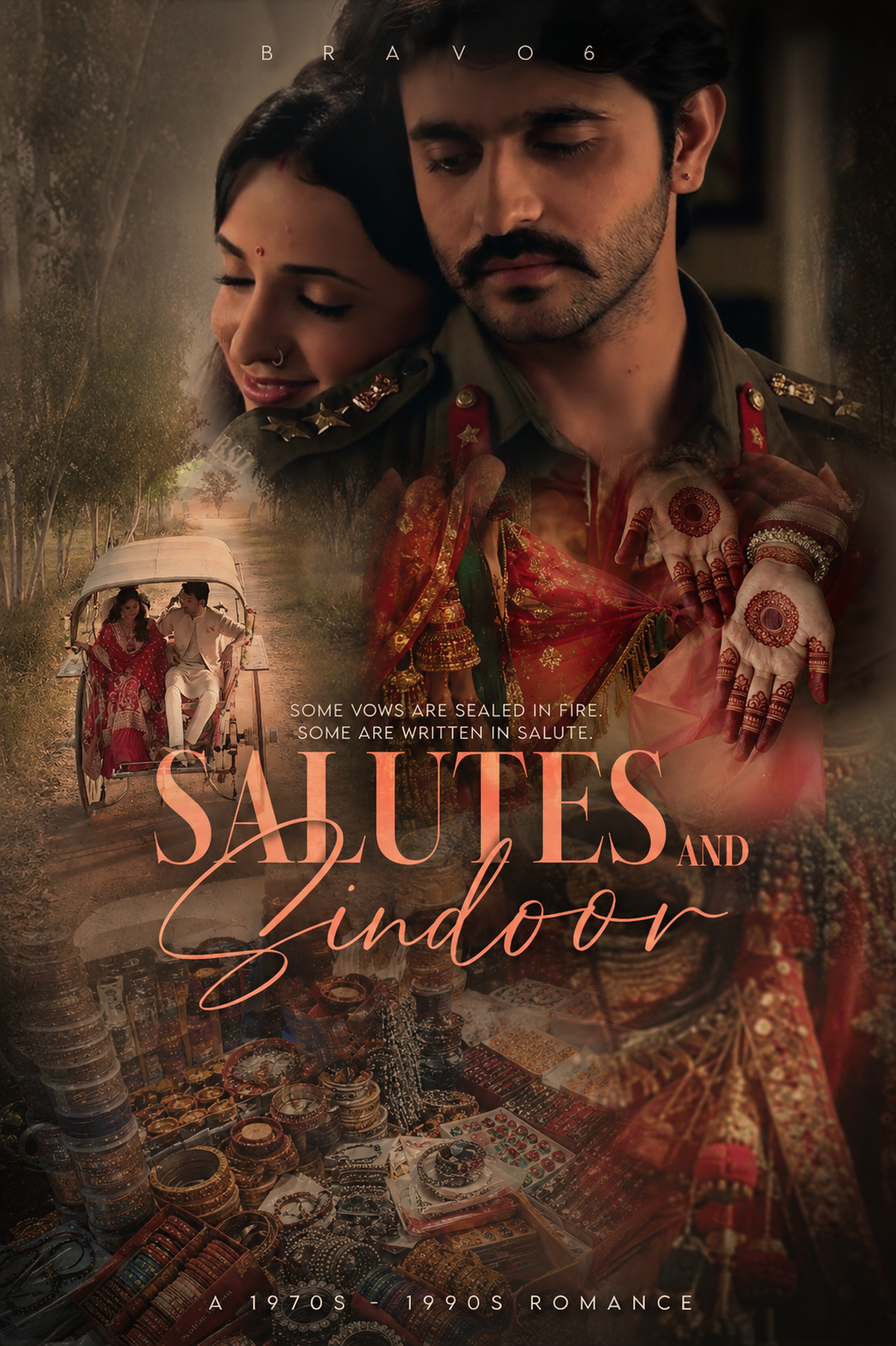
Write a comment ...